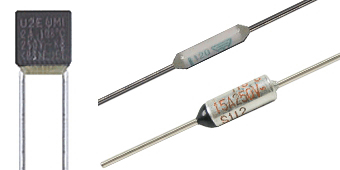
Clause 3 – How to understand the definition of “thermal link”

thermal link: thermal cut-out which operates only once and requires partial or complete replacement

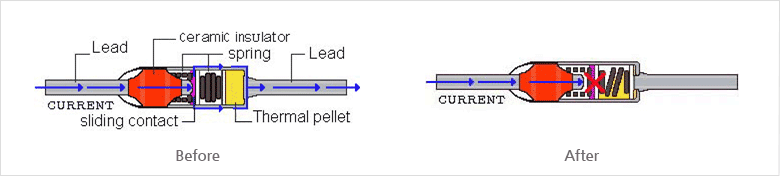
It is a temperature sensing device, but it can only be operated once, when the temperature is higher than its set value, it will disconnect, and after disconnection, the current can not pass through, so as to play the role of power failure. Once disconnected, it will not be like self-resetting thermal cut-out, due to the temperature drop and reset itself to connect to the power supply; can only be partially or complete replaced to connect to the original circuit.
In practice, this part is rarely replaced. Because thermal links are generally more securely fastened and difficult to replace, like they are used in motors. They are used in motors and in many heating appliances, such as electric water heaters, room heaters, etc. It is generally used as the ultimate means of thermal protection. Generally speaking, before it is actuated, a self-resetting thermal cut-out with a lower operating temperature is allowed to act first. If the self-resetting thermal cut-out does not eliminate the danger, the thermal link will completely cut off the circuit and keep the circuit continuously disconnected.
The following pictures show a thermal link in a motor and a thermal link in a room heater.
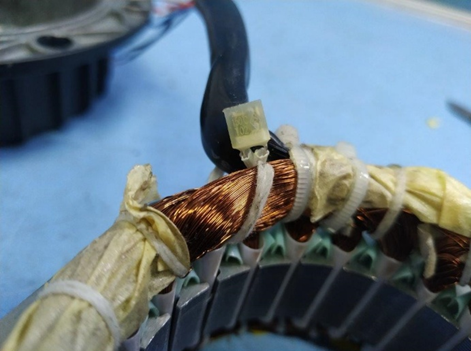
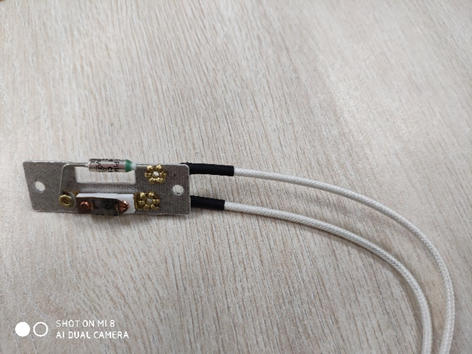
thermal fuses
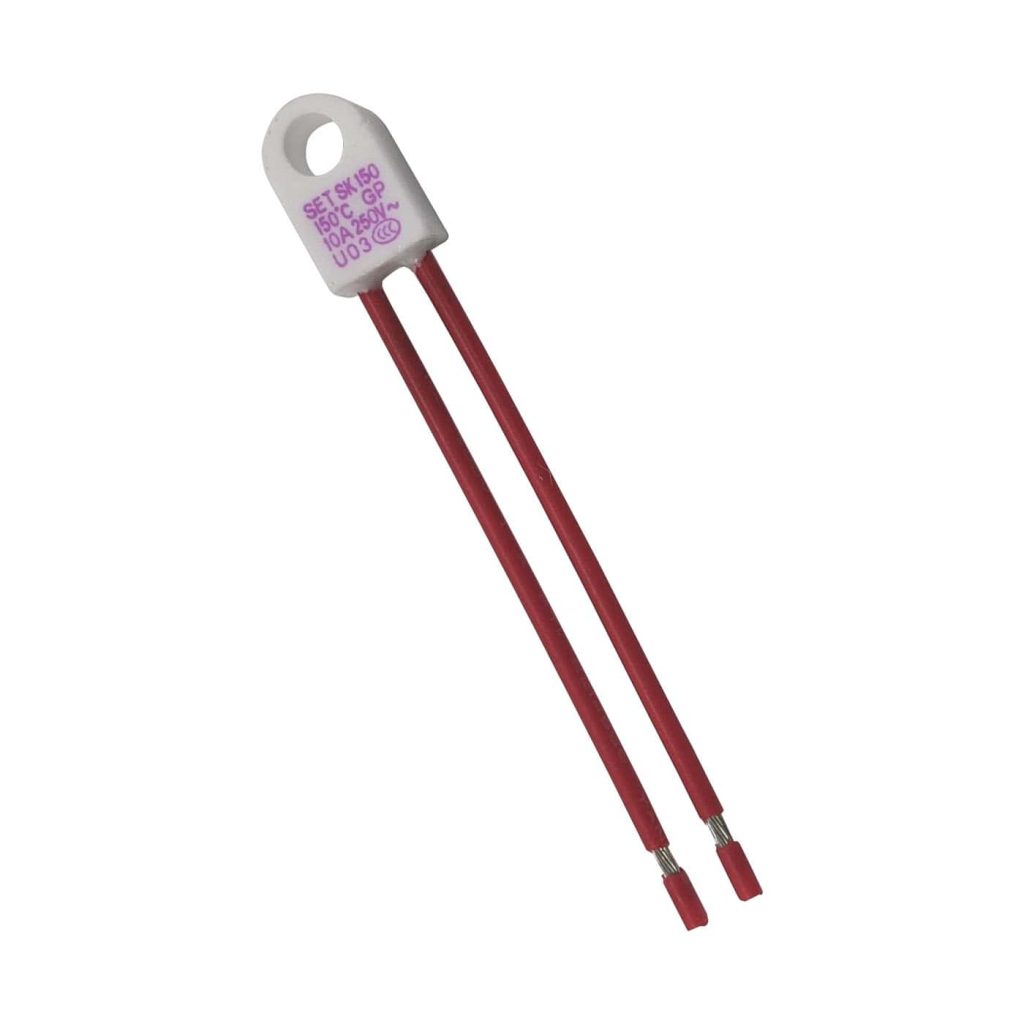
SK150 Thermal Fuse
internal view for thermal fuse

Similar Posts

  • 第3項 「特別低圧」の定義の見方

    特別低電圧:機器内の電源から供給される電圧であって、機器が定格電圧で供給されている場合に、導体間および導体とアース間が50Vを超えない電圧 EU 低電圧指令の定義によれば、低電圧の範囲は AC で 50 ~ 1000V、DC で 75 ~ 1500V です。ちなみに、ほとんどの国ではこの電圧値に応じて高電圧と低電圧を分けています。したがって、範囲の上限を超える電圧は高電圧となり、範囲の下限を下回る電圧は超低電圧となります。この規格における定義では、DC と AC は区別されません。ここで注意していただきたいのは、電圧名は電圧値に応じて定義されているだけであり、低電圧回路の特定の部分を定義するものではありません。電圧は相対的なものであるため、電圧を測定する場合、電圧は両端間で測定する必要があります。つまり、電圧には基準点が必要であるため、規格ではワイヤ間およびワイヤとアース間の電圧について言及しています。 一般家庭用アルカリ電池の出力電圧、一般家庭用電化製品の制御基板上の変圧器以降の低圧回路やRC降圧回路の動作電圧など、いずれも特別低電圧と定義できるもの. 下図のようにR1とC1で降圧機能が完成しますので、R1とC1以降の回路は特別低圧回路と定義できます。

  • Clause 3 – How to understand the definition of “self-resetting thermal cut-out”

    self-resetting thermal cut-out: thermal cut-out that automatically restores the current after the relevant part of the appliance has cooled down sufficiently In the definition there is a clear mention, when the temperature is cooled to a certain degree, in fact, its intention is to control the temperature is not too high, when the temperature is…

  • 第 3 項 – 「クラス II アプライアンス」の定義の理解方法

    クラスⅡ機器:感電に対する保護を必要としない機器 基礎絶縁 ただし、追加の安全予防措置が提供される場合のみ 二重絶縁 または 強化絶縁、保護接地の規定や設置条件への依存はありません。 注 1 このようなアプライアンスは、次のタイプのいずれかになります。– 銘板、ネジ、リベットなどの絶縁された部品を除き、すべての金属部品を覆う、耐久性があり実質的に連続した断熱材の筐体を備えた機器 充電部 同等以上の絶縁により 強化絶縁;このような器具は断熱材入りと呼ばれます クラス II 機器;– 実質的に連続した金属製の筐体を備えた機器 二重絶縁 または 強化絶縁 は全体で使用されます。このような器具は金属ケースと呼ばれます クラス II 機器;– 断熱材で覆われた機器を組み合わせた器具 クラス II 機器 そして金属ケース クラス II 機器.注2 絶縁被覆の筐体 クラス II 機器 の一部または全体を形成する場合があります 補助絶縁 またはの 強化絶縁. ここでは二重の予防策の観点から考えていきます。基礎絶縁に加えて、製品には別の絶縁層も必要です。つまり、いずれかの層の絶縁が機能しなくなった場合でも、別の層の絶縁が保護の役割を果たすことを保証する二重絶縁対策です。強化絶縁による感電防止効果は二重絶縁と同等の場合が多く、二重の予防策としても有効と考えられます。規格によって定義されたクラス II 機器は、機器が独自のケーシング、絶縁電線、および絶縁電線のシースによって二重絶縁の効果を達成することを主に強調しています。接地対策が施された機器はクラス I 機器であるため、クラス II 機器には保護接地がありません。 クラス 0 機器を除き、大面積のプラスチックまたは絶縁ハウジングを備えたすべての機器は、通常、クラス II 機器として設計されています。ただし、金属ハウジングを備えたモーターもあり、その製品はクラス II 機器の要件を満たすことができますが、モーターには保護接地措置が講じられています。このアプライアンスはクラス I…

  • Clause 3 – How to understand the definition of “motor-operated appliance”

    motor-operated appliance: appliance incorporating motors but without any heating elementNote 1 to entry: Magnetically driven appliances are considered to be motor-operated appliances. Household electrical appliances usually use heating elements or motors to complete their designed functions. The main functions are heating, such as heating food or air, and rotation or mechanical movement of products, such…

  • Clause 3 – How to understand the definition of “detachable power supply part”

    detachable power supply part: part of the appliance the output of which is intended to be detachable from the class III construction part of the appliance.Note 1 to entry: Means of detachment are a flexible cord and connector or an appliance outlet fitted to the detachable power supply part. This actually defines a detachable adapter….

  • 第 3 項 – 「保護インピーダンス」の定義の理解方法

    保護インピーダンス: 通常の使用時および機器の故障の可能性がある状態での電流が安全な値に制限されるように、クラス II 構造の充電部分とアクセス可能な導電部分の間に接続されたインピーダンス。 ケース1:最初のケースは、通常、アダプター駆動の製品など、低電圧電源を必要とする状況です。アダプターの出力電圧はDC12V、DC24V、またはDC5Vです。これらの低電圧部品は、変圧器の変圧と整流器電流の整流によって得られるため、一般にユーザーが触れることができます。したがって、高電圧部分と電圧部分を効果的に絶縁する必要があります。当社の一般的なスイッチング電源基板では、EMC 伝導テストを実施すると、トランスの一次側で発生した干渉が一次側と二次側の間の寄生容量を通過し、150k~30MHz の伝導性干渉が発生して二次側に到達します。ここでは、Y コンデンサを使用して干渉信号を電源に戻し、干渉を相殺するループを形成します。そうしないと、導通テストが不合格になります。ここでの Y コンデンサは保護インピーダンスを形成します。下図の赤いボックスで選択された 2 つの Y コンデンサが保護インピーダンスです。 下図はマイナスイオン発生器の回路図です。赤い四角形で選択された 2 つの抵抗は、一般的な保護インピーダンスです。 下の図のCY1とCY2は保護インピーダンスですか? 規格の定義から、保護インピーダンスは接地が存在するクラス II 構造で使用されます。ここでの接地が保護接地として定義されている場合、保護インピーダンスはクラス II 構造で使用され、ここではクラス I 構造であるため、明らかに CY1 と CY2 を保護インピーダンスとして定義できません。ここでの接地が機能接地として定義されている場合、2 つの問題があります。まず、これはクラス I 構造であるため、CY1 と CY2 は保護インピーダンスとして定義できません。次に、クラス II 構造の場合、CY1 と CY2 を保護インピーダンスとして定義でき、保護インピーダンスの関連要件を満たす必要があります。私の個人的な意見は、CY1 と CY2 は保護インピーダンスではなく、直接基礎絶縁とみなしてよいと考えています。結局のところ、回路図に示されている設計は規格に受け入れられないということでしょうか?そしてnbsp; それらが保護インピーダンスである場合、どちらが第 22.42 条「保護インピーダンスは少なくとも 2 つの別個のコンポーネントで構成されなければならない」に準拠する必要があります。 From the definition of the standard, the…