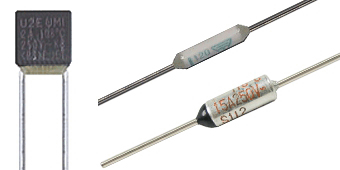
Clause 3 – How to understand the definition of “thermal link”

thermal link: thermal cut-out which operates only once and requires partial or complete replacement

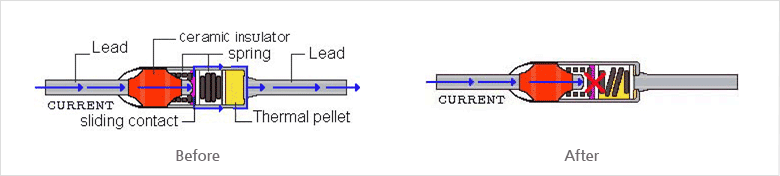
It is a temperature sensing device, but it can only be operated once, when the temperature is higher than its set value, it will disconnect, and after disconnection, the current can not pass through, so as to play the role of power failure. Once disconnected, it will not be like self-resetting thermal cut-out, due to the temperature drop and reset itself to connect to the power supply; can only be partially or complete replaced to connect to the original circuit.
In practice, this part is rarely replaced. Because thermal links are generally more securely fastened and difficult to replace, like they are used in motors. They are used in motors and in many heating appliances, such as electric water heaters, room heaters, etc. It is generally used as the ultimate means of thermal protection. Generally speaking, before it is actuated, a self-resetting thermal cut-out with a lower operating temperature is allowed to act first. If the self-resetting thermal cut-out does not eliminate the danger, the thermal link will completely cut off the circuit and keep the circuit continuously disconnected.
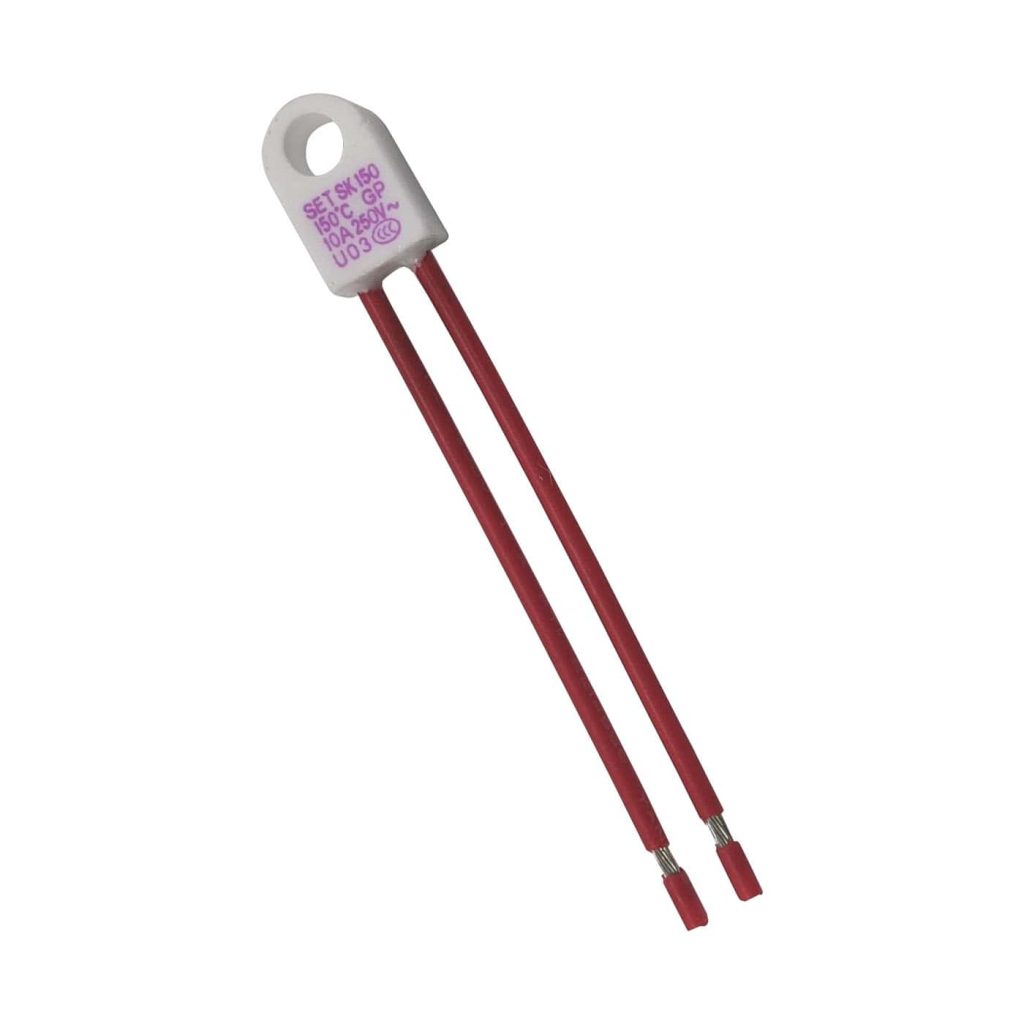
The following pictures show a thermal link in a motor and a thermal link in a room heater.
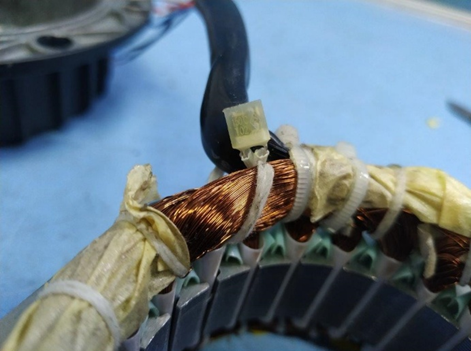
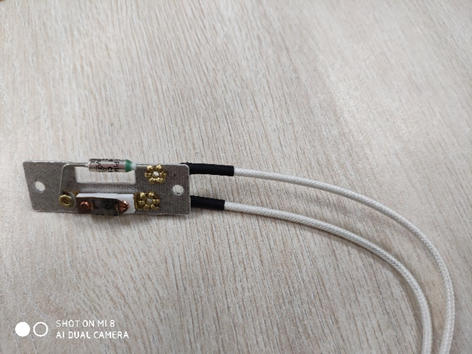
thermal fuses
SK150 Thermal Fuse
internal view for thermal fuse

Similar Posts

  • Clause 3 – How to understand the definition of “combined appliance”

    combined appliance: appliance incorporating heating elements and motors. We know that this standard mainly protects against the following five types of dangers, which are electric shock, mechanical damage from moving parts, thermal damage (such as burns), fire damage, chemical and biological damage. Generally speaking, thermal damage is caused by electric heating elements, and mechanical damage…

  • Why is the double limit allowed in clause 16.2?

    The statement of standard as below:The values specified above are doubled if all controls have an off position in all poles. They are also doubled if:– the appliance has no control other than a thermal cut-out; or– all thermostats, temperature limiters and energy regulators do not have an off position; or– the appliance has radio…

  • ข้อ 3 – วิธีทำความเข้าใจคำจำกัดความของ “ช่วงแรงดันไฟฟ้าที่กำหนด”

    ช่วงแรงดันไฟฟ้าที่ผู้ผลิตกำหนดให้กับเครื่องใช้ไฟฟ้า แสดงด้วยขีดจำกัดล่างและบน:คำจำกัดความนี้เป็นส่วนขยายของคำจำกัดความของ พิกัดแรงดันไฟฟ้า พิกัดแรงดันไฟฟ้าพิกัดแรงดันไฟฟ้า แต่ไม่ค่อยมีการกำหนดแรงดันไฟฟ้าที่กำหนดตัวอย่างเช่น ผลิตภัณฑ์ที่ออกแบบมาสำหรับตลาดเป้าหมายสำหรับตลาดประเทศสมาชิก EU ทั้งหมดของยุโรป ประเทศสมาชิก EU ส่วนใหญ่ของแรงดันไฟฟ้าสาธารณูปโภคคือ AC 230V แต่มีบางประเทศเป็น AC 240V หากเป็นเพียงข้อกำหนดแยกต่างหาก ของแรงดันไฟฟ้าที่กำหนดของ AC230V หรือ AC240V ดังนั้นผลิตภัณฑ์นี้ไม่สามารถใช้กับแรงดันไฟฟ้าที่ใช้ในอาคารแตกต่างจากแรงดันไฟฟ้าที่กำหนดของประเทศได้ จากสถานการณ์นี้ เราสามารถระบุแรงดันไฟฟ้าที่กำหนดในรูปแบบของช่วง AC220-240V ซึ่งครอบคลุม AC220V และ AC230V และ AC240V เพื่อให้ผลิตภัณฑ์ที่เกี่ยวข้องสามารถนำมาใช้ในประเทศที่มีแรงดันไฟฟ้าสาธารณูปโภคทั้งสามนี้ ในที่นี้ AC220-240V หรือ 220-240V~ เป็นรูปแบบทั่วไป นอกจากนี้ จะมี 220-230V~ หรือ 380V-415V~ หรือ 100-240V~ (สถานการณ์ส่วนใหญ่นี้เกิดขึ้นในการใช้อะแดปเตอร์ที่ขับเคลื่อนโดยแรงดันไฟฟ้าอินพุตที่กำหนดของอะแดปเตอร์) และอื่นๆ เนื่องจากแรงดันไฟฟ้าที่กำหนดของผลิตภัณฑ์ถูกตั้งค่าในช่วง ข้อกำหนดด้านความปลอดภัยในช่วงแรงดันไฟฟ้านี้จึงต้องได้รับการประเมินตามมาตรฐาน, but rarely a defined rated voltage. For…

  • ข้อ 3 – วิธีทำความเข้าใจคำจำกัดความของ “หม้อแปลงแยกความปลอดภัย”

    หม้อแปลงที่กล่าวถึงในที่นี้ใช้เพื่อจ่ายไฟให้กับเครื่องใช้ไฟฟ้าหรือวงจร หม้อแปลงทั่วไปส่วนใหญ่จะจ่ายไฟให้กับวงจร และจ่ายไฟให้กับเครื่องใช้ไฟฟ้าบางส่วน สิ่งสำคัญที่นี่คือการวัดการแยกระหว่างขดลวดอินพุตและขดลวดเอาต์พุต ซึ่งต้องเป็นฉนวนสองชั้นหรือฉนวนเสริมแรง หรือฉนวนชนิดเทียบเท่า ข้อกำหนดนี้คือเพื่อให้แน่ใจว่าขดลวดปฐมภูมิและขดลวดทุติยภูมิมีฉนวนเพียงพอ หากฉนวนเพียงพอ การแยกระหว่างขดลวดปฐมภูมิและขดลวดทุติยภูมิของหม้อแปลงไฟฟ้าจะค่อนข้างปลอดภัย ข้อควรระวังในการป้องกันสองชั้น หม้อแปลงไฟฟ้าที่ใช้กันมากที่สุดสองตัวในเครื่องใช้ในครัวเรือนแสดงในรูปด้านล่าง หม้อแปลงชนิดแรกที่ใช้ในบอร์ด PCBboard ของสวิตช์ไฟ หม้อแปลงชนิดนี้จะวางขดลวดปฐมภูมิและขดลวดทุติยภูมิทับบนแกนแม่เหล็กเดียวกัน ดังนั้น เพื่อให้แน่ใจว่าระยะห่างตามผิวฉนวนและระยะห่างทางไฟฟ้าระหว่างปฐมภูมิและทุติยภูมิ จึงไม่สามารถวางขดลวดที่พันไว้บนใบหน้าส่วนบนและส่วนล่างได้ ขดลวดจะต้องอยู่ห่างจากผิวหน้าด้านบนและด้านล่าง ดังแสดงในรูปด้านล่าง: เพื่อช่วยให้ผู้อ่านเข้าใจโครงสร้างของหม้อแปลงนี้ได้ดีขึ้น ผมจึงได้นำรูปถ่ายภายนอกและภายในของหม้อแปลงทั้งหมดมาไว้ในหน้านี้เพื่อใช้อ้างอิงสำหรับผู้อ่าน มุมมองโดยรวมสำหรับหม้อแปลงฉนวนนิรภัย The other is a drawer-type linear transformer, as shown below:

  • Clause 3 – How to understand the definition of “detachable part”

    detachable part: part that can be removed or opened without the aid of a tool, a part that is removed or opened in accordance with the instructions for use, even if a tool is needed for removal, or a part that does not fulfil the test of 22.11.NOTE 1 If for installation purposes a part…

  • Clause 3 – How to understand the definition of “motor-operated appliance”

    motor-operated appliance: appliance incorporating motors but without any heating elementNote 1 to entry: Magnetically driven appliances are considered to be motor-operated appliances. Household electrical appliances usually use heating elements or motors to complete their designed functions. The main functions are heating, such as heating food or air, and rotation or mechanical movement of products, such…