Clause 3 – How to understand the definition of “thermal link”

thermal link: thermal cut-out which operates only once and requires partial or complete replacement

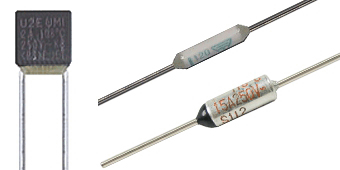
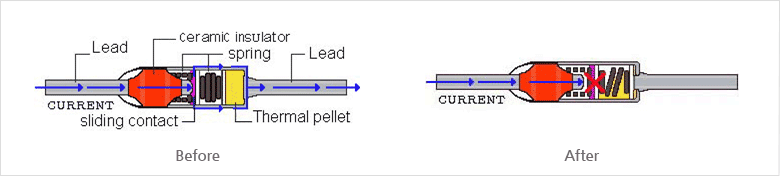
It is a temperature sensing device, but it can only be operated once, when the temperature is higher than its set value, it will disconnect, and after disconnection, the current can not pass through, so as to play the role of power failure. Once disconnected, it will not be like self-resetting thermal cut-out, due to the temperature drop and reset itself to connect to the power supply; can only be partially or complete replaced to connect to the original circuit.
In practice, this part is rarely replaced. Because thermal links are generally more securely fastened and difficult to replace, like they are used in motors. They are used in motors and in many heating appliances, such as electric water heaters, room heaters, etc. It is generally used as the ultimate means of thermal protection. Generally speaking, before it is actuated, a self-resetting thermal cut-out with a lower operating temperature is allowed to act first. If the self-resetting thermal cut-out does not eliminate the danger, the thermal link will completely cut off the circuit and keep the circuit continuously disconnected.
The following pictures show a thermal link in a motor and a thermal link in a room heater.
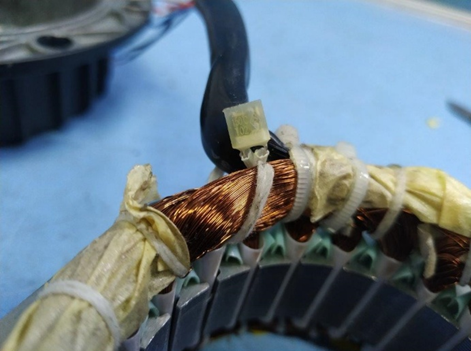
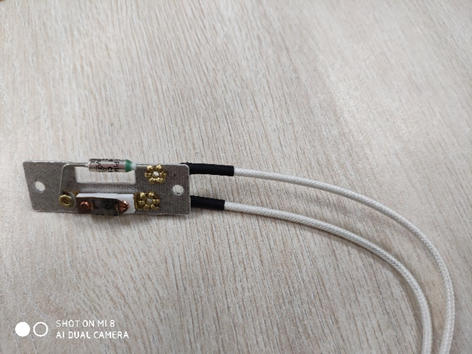
thermal fuses
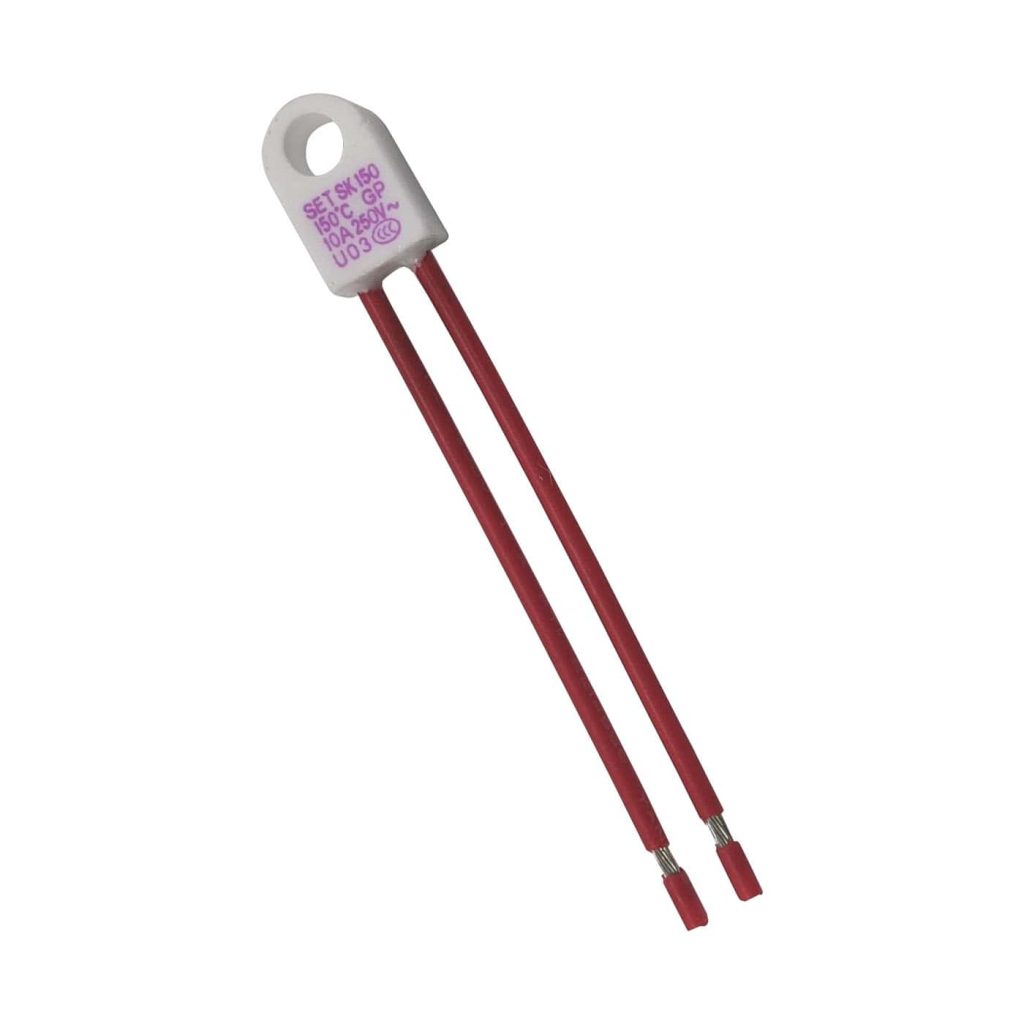
SK150 Thermal Fuse
internal view for thermal fuse

Similar Posts

  • 第3項 「第二種工事」の定義の見方

    ここで重点を置くのは、二重絶縁または強化絶縁の要件を満たすことができる機器の構造の一部です。したがって、クラス I アプライアンスにはクラス II 構造も含まれます。例:下図のオーブンでは金属シェルとプラスチック製スイッチノブが使用されています。使用者がスイッチノブに触れると、ノブは絶縁体でできているため接地できません。感電に対する保護はノブ自体の絶縁にのみ依存します。スイッチ内部の充電部とスイッチノブ軸間は基礎絶縁となっており、スイッチノブは補助絶縁を形成します。したがって、スイッチノブの位置はクラスII構造となります。    

  • Clause 3 – How to understand the definition of “protective extra-low voltage circuit”

    protective extra-low voltage circuit: earthed circuit operating at safety extra-low voltage which is separated from other circuits by basic insulation and protective screening, double insulation or reinforced insulationNOTE 1 Protective screening is the separation of circuits from live parts by means of an earthed screen.NOTE 2 A protective extra-low voltage circuit is also known as…

  • 第3項 「遠隔操作」の定義の捉え方

    リモート操作: 電気通信、音響制御、バス システムなどの手段を使用して、機器から見えないところで開始できるコマンドによる機器の制御注記 赤外線コントロール自体は、遠隔操作に使用されるものとみなされません。ただし、通信、音響制御、バス システムなどのシステムの一部として組み込まれる場合があります。 一般的に使用されている赤外線リモコンは、赤外線リモコンの使用者が機器の作業現場にいて、赤外線リモコンを操作した後の機器の反応や動作状況をリアルタイムで確認できるため、遠隔操作ではありません。赤外線リモコンが通信システム、音声制御システム、またはバスシステムの一部である場合、この場合、制御の開始者は主に通信システム、音声制御システム、またはバスシステムを介して制御を完了する。一般的に、制御の開始者は、通信システム、音声制御システム、またはバス システムを介して別の赤外線コントローラに指示を送信し、その後、赤外線コントローラが赤外線リモコン情報を機器に送信して操作を完了します。この場合、この一連の制御システムは遠隔操作と見なすことができます。 例:一般的なエアコンに使用されている赤外線リモコンは遠隔操作ではありません。現在、建物の中核部分に設置できる集中型コントローラーが市販されています。ユーザーは、WIFI 経由で赤外線信号を送信するように制御できます。送信された赤外線信号は、室内のあらゆる電気製品を制御できます。これは遠隔操作です。 Commonly used infrared remote controls are not remote operation, because the user of the infrared remote controls is at the working site of the appliance, and can view the reaction and working status of the appliance after the infrared remote controls is operated in real time….

  • Clause 3 – How to understand the definition of “thermostat”

    thermostat: temperature-sensing device, the operating temperature of which may be either fixed or adjustable and which during normal operation keeps the temperature of the controlled part between certain limits by automatically opening and closing a circuit. The thermostat itself does not control the temperature, the thermostat senses the temperature and controls the temperature by switching…

  • 第3項 – 「安全特別低電圧」の定義の見方

    安全特別低電圧: 導体間および導体とアース間の電圧は 42 V を超えず、無負荷電圧は 50 V を超えない 安全特別低電圧が主電源から得られる場合、安全絶縁を介する必要があります。 注 1 指定された電圧制限は、安全絶縁変圧器が定格電圧で供給されるという前提に基づいています。注 2 安全特別低電圧は SELV とも呼ばれます。 はじめに-1 。また、本項で定義する「安全」は、SELV を使用者が直接触れることができる絶対的な安全を意味するものではありません。ユーザーは、セクション 8.1.4 の要件を満たす SELV 回路のみに触れることができます。この電圧は通常、安全絶縁変圧器または別の巻線を備えたコンバータを通じて電圧を降圧することによって得られます。通常、これは安全絶縁変圧器を通じて得られます。ここで、別個の巻線を備えた安全絶縁変圧器またはコンバータは、一次巻線と二次巻線が物理的に構造的に分離されていることを保証できます。つまり、一次巻線と二次巻線が直接接触しないようにすることができます。この別巻線による回路分離に対応した電圧調整方式の一般的な例は、220V 回路に抵抗とコンデンサを直列に並列接続する RC 降圧方式です。 RC降圧方式では、回路内で高圧部と低圧部が接続されます。明らかに、物理的手段によって回路を分離する前者の方法の方が安全です。単純な物理的分離である場合でも、安全要件を満たすことはできません。規格で要求される絶縁は二重絶縁または強化絶縁の要件を満たす必要があります。簡単に言うと、高電圧部分と低電圧部分の間に非常に単純な絶縁(低温耐性を持つ薄いプラスチックシートなど)がある場合、この絶縁は高温または高電圧条件下で破損しやすく、基本的には絶縁できません。このプラスチックシートの層は絶縁の役割を果たしますが、高電圧回路と低電圧回路を物理的に分離することもあります。二重絶縁と強化絶縁の絶縁要件も二重保護の手段です。下の図に示すように、トランスには一次巻線と二次巻線を分離するためにディスクに垂直に配置された 3 つのプラスチック ブラケットがあり (一次巻線と二次巻線の外側には青いプラスチック テープが巻かれています)、一次巻線と二次巻線は物理的に隔離されています。 下の図に示すように、トランスには中央の一次巻線と二次巻線に黄色いテープが巻かれています。強化絶縁の沿面距離要件を満たしているかどうかを確認するには、2 つの巻線間の黒いブラケットの沿面距離に特に注意を払う必要があります。そうでない場合、その変圧器は安全絶縁変圧器として判断できません。 安全絶縁トランスの構造については次回詳しく説明します。 As shown in the figure below, the transformer has yellow tape wrapped around the primary and secondary windings in the…

  • Clause 3 – How to understand the definition of “fixed appliance”

    fixed appliance: appliance that is intended to be used while fastened to a support or while secured in a specific location. The definition emphasizes fastening to a bracket or fixing in a specific position. Generally, we think that this kind of fixation requires some installation actions and some fixing devices, these devices can be fixed…