A question about clause 21.1 and detachable parts

21.1 Appliances shall have adequate mechanical strength and be constructed to withstand such rough handling that may be expected in normal use.
Compliance is checked by applying blows to the appliance in accordance with test Ehb of
IEC 60068-2-75, the spring hammer test.
The appliance is rigidly supported and three blows, having an impact energy of 0,5 J, are applied to every point of the enclosure that is likely to be weak.
After the test, the appliance shall show no damage that could impair compliance with this standard and compliance with 8.1, 15.1 and Clause 29 shall not be impaired. In case of doubt, supplementary insulation and reinforced insulation are subjected to the electric strength test of 16.3.
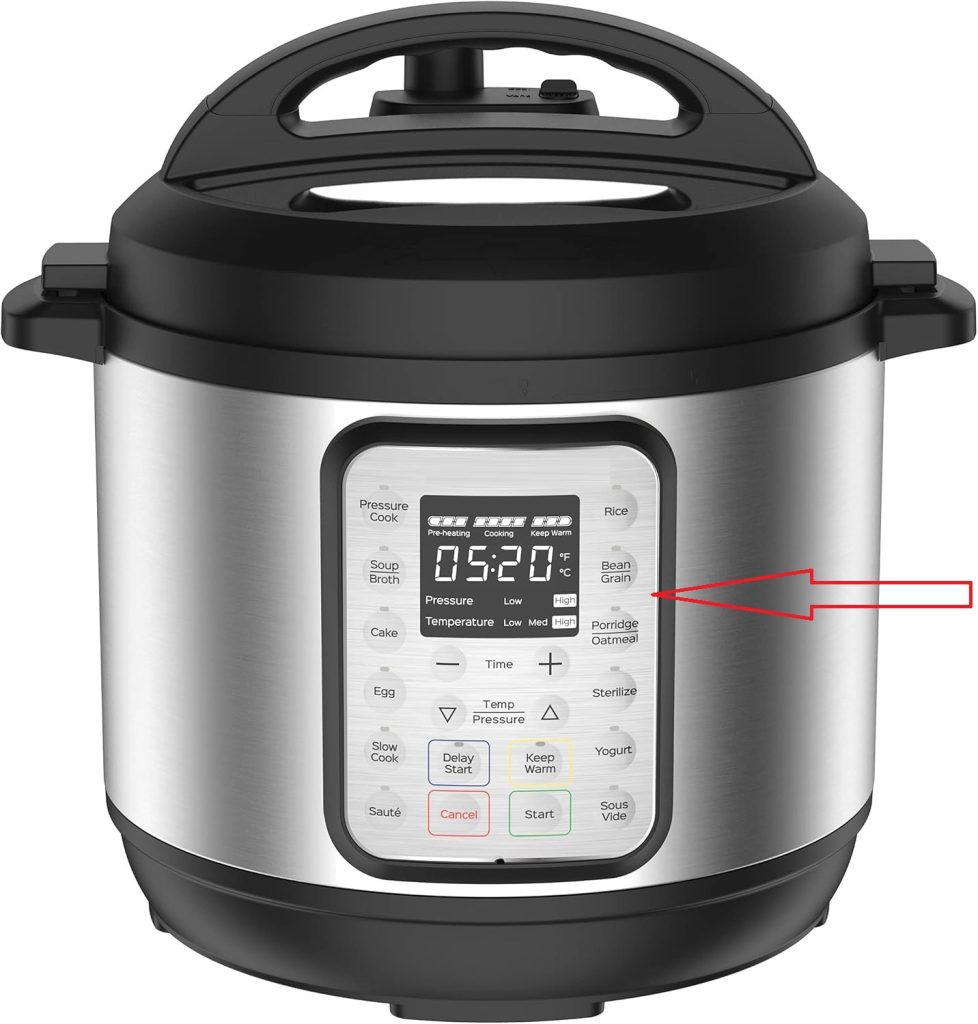
As shown in the figure, the pressure cooker uses a flexible PVC film as the operating panel, on which the function indication marks of each switch button are silk-screened. It is fixed to the appliance housing behind it by glue. The PVC was removed when subjected to clause 22.11. Obviously, the operating panel made of this PVC film is a detachable part.
When the PVC is in place, the impact test of clause 21.1 is pass, and the test cannot damage the flexible PVC film and the plastic housing behind it. If the PVC film is removed, the impact test is directly applied to the plastic housing behind the PVC film, the plastic housing breaks, and the test finger can touch the live parts inside.
Do we need to remove the PVC before testing in clause 21.1?
In my opinion, we don’t need to remove the PVC film. Because clause 21.1 does not require removal, and clause 21.1 requires testing under “normal use” conditions. If the PVC film is removed, it is obviously not in normal use.
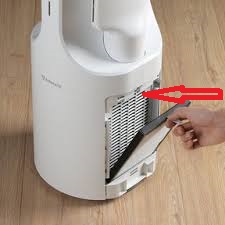
Then the question is, should the detachable parts be removed before testing in clause 21.1? The standard does not say, so I think we should base it on the characteristics of the product. In the example above, it does not need to be removed. If it is an air purifier as shown in the figure below, after its user-replaceable filter is removed, the internal fan blade guard needs to be tested in clause 21.1, because I think the state of removing the guard is normal and is also a common normal usage state.
Similar Posts

  • Clause 3 – How to understand the definition of “live part”

    live part: conductor or conductive part intended to be energized in normal use, including a neutral conductor but, by convention, not a PEN conductorNOTE 1 Parts, accessible or not, complying with 8.1.4 are not considered to be live parts.NOTE 2 A PEN conductor is a protective earthed neutral conductor combining the functions of both a…

  • 第3項「基礎断熱」の定義の見方

    基本絶縁: 感電に対する基本的な保護を提供するために通電部分に適用される絶縁 一般的に言えば、充電部と直接接触する絶縁層は、一般的な絶縁材料 (PVC や ABS などのプラスチック材料など) である場合もあれば、空気または絶縁層上に形成された距離 (沿面距離) である場合もあります。断熱材の表面。ほとんどの国では、ユーザーが基礎断熱材に触れる可能性のある構造は認められていません。したがって、基礎絶縁は通常、機器の内部に配置されており、通常の動作中に触れることはできません。 下の左の写真は扇風機の底カバーの写真、右の写真は底カバーを外した写真です。右の写真の電源コード内の青と茶色のワイヤ外皮は、基本絶縁と考えることができます。同時に、黒いシェルに接続されているスイッチの白、赤、黒の線の外皮も基礎絶縁であると判断できます。ここでの充電部分は、ワイヤ内の銅芯です。また、スイッチ内の金属導体と白色シェル内面との距離により基礎絶縁性と判断できます。沿面距離の観点から見ると、スイッチ内の導体の電気は、スイッチの絶縁表面に沿って白いシェルの内面 (右の図の左の小さい角) まで伝導 (登って) します。この距離は、基礎絶縁体の沿面距離とみなしてください。電気的クリアランスの観点からは、スイッチ内部の導体の電気はファンボトムカバー内面とスイッチシェルの間の空気を介して直接伝導しており、この空気間の距離が基礎絶縁のクリアランスと判断されます。 (白いプラスチックシェルは追加絶縁と判断されます) 下図に示すように、モーターの巻線のラッカー塗装された導体は、モーターのステーターに挿入された白いスロット紙によって固定されています。巻線は規格により露出充電部として識別されます。ラッカー塗装された巻線の導体とモーターのステーターは、スロット ペーパーを介して導電ループを形成します (一般に、クラス I 機器の場合、モーター ハウジングが接地されているため、モーター ハウジングに接続されているステーターも接地されます。クラス II 機器では、モーター ハウジングとモーター ステーターは接地されていない中間金属コンポーネントです)。スロット紙の導電性は十分ではありませんが、スロット紙には微弱な電流が発生します。ここで発生する電流量はスロット紙の性能に直結します。ここでのスロット紙の材質は基礎絶縁体と判断できます。スロット ペーパーの表面は巻線の金属積層板に接続できるため、スロット ペーパーの表面上の距離は基礎絶縁体の沿面距離として決定できます。スロットペーパーの材質自体が固体絶縁の役割を果たします(固体絶縁には厚さの要件はありませんが、それでも第 13 章と第 16 章の漏れ電流と耐電圧要件を満たす必要があります)。したがって、上図の電気的クリアランスは、空中での巻線と固定子の積層間の最短距離です。 下の図に示すように、注意: モーターの巻線が適切に固定されておらず、モーターのステーターに非常に接近しています。第 29 条の沿面距離と空間距離の要件を満たすことができなくなりました。これは一般的な不適合項目です。 ファンモーターの基礎絶縁 basic insulation of fan motor

  • Clause 3 – How to understand the definition of “non-detachable part”

    non-detachable-part: part that can only be removed or opened with the aid of a tool or a part that fulfils the test of 22.11. The definition of this concept is mainly for the judgment of clause 8 and clause 20, and the judgment of other clauses may also be used. On the appliance, whether any…

  • Clause 3 – How to understand the definition of “detachable part”

    detachable part: part that can be removed or opened without the aid of a tool, a part that is removed or opened in accordance with the instructions for use, even if a tool is needed for removal, or a part that does not fulfil the test of 22.11.NOTE 1 If for installation purposes a part…

  • 8.1.5 – 設置または組み立て前に少なくとも基礎絶縁によって保護される

    第 8.1.1 条では、アプライアンスが「通常の使用」の場合にテスト プローブを使用する必要があると述べていますが、第 8.1.5 条では設置前に評価されます。このような製品は複数の部分に分けて納品されるため、通常は現場での設置が必要です。 「ライブと nbsp;部品と nbsp;of と nbsp;内蔵と nbsp;アプライアンスと nbsp;固定と nbsp;アプライアンスと nbsp;および nbsp;アプライアンスと nbsp;納品されたと nbsp;in と nbsp;分離とnbsp;ユニットとnbsp;shallとnbsp;beとnbsp;保護とnbsp;atとnbsp;leastとnbsp;byとnbsp;基本とnbsp;絶縁とnbsp;前とnbsp;インストールとnbsp;またはとnbsp ;組み立て。”ここで、設置中に一種の危険が発生します。例は次のとおりです。 室内機に補助電気ヒーターを内蔵したエアコン製品で、室内機と室外機を2つに分けて梱包し、まとめてお客様の元へお届けするもの使用の。設置の際、室内機の電源供給が室外機を介して行われる場合、設置者はまず室内機と室外機の接続を行う可能性があります(室内機と室外機の接続には注意してください)。配線 (相互接続コード) は、配電前にすでに室内ユニットの端子に接続されています。)、その後、試運転のために室外ユニットに通電します。試運転プロセス中に、設置者自身または他の設置者は、室内機のコンポーネントの一部が実際に帯電していることに気付かない可能性があります (帯電している部分は室外機であるため)。また、これらの帯電した部分が基礎絶縁によって保護されていない場合は、 、感電の危険があります。 nbsp; これはエアコンの電気補助ヒーターのほんの一例ですが、一般的な問題点のほとんどは端子です。 下の左の写真を見ると、エアコンの室内機が前面パネルを開けると、内部の右側にネジで固定されているプラ​​スチックのカバープレートがあり、そのカバープレートの下に端子があり、右の図に端子が表示されます。端子の下部には室外機との接続コードとなる線が数本あります。カバー プレートと注意事項がない場合、室内ユニットと室外ユニットの接続および室外ユニットへの電源の接続が完了した後、(フロント パネルは取り外し可能な部品であり、一般に実質的に絶縁されているとはみなされません)室内機の端子が帯電しており、カバーパネルで保護されていないと感電の恐れがあります。

  • 第 3 項 – 「クリアランス」の定義の理解方法

    クリアランス: 2 つの導電性部品間、または導電性部品と導電性部品間の空気中の最短距離アクセス可能な表面。 クリアランスは非常に重要な概念です。クリアランスを理解するには、完全に絶縁された物質はなく、空気も電気を通すことができるということをもう一度言う必要があります。電圧が非常に高い場合、電流は空気中に伝導します。雷雨時の落雷は、雷が空気中を伝導する典型的な例です。雷の電圧は非常に高いため、空気の非常に長い部分を突き破り、空気のこの部分が導電性になります。家電製品では、電圧は非常に低いですが、製品中には空気が多く含まれており、空気中にも電流が流れます。電圧が増加すると、電圧が空気を突き抜ける距離も長くなります。これにより、クリアランスの概念が生まれます。クリアランスの詳細な説明については、IEC 60664-1 (低電圧システム内の機器の絶縁調整 – パート 1: 原則、要件、およびテスト) を参照してください。 次の写真は電気的除去の経路をよく説明していると思います。 電圧の異なる2つの電極間や、充電部と電気製品使用者の手の間に隙間が生じる場合があります。上の写真の 2 つの電極を他の物体として想像するだけで済みます。 キー アクセス可能な発掘された金属部品 1 つ 2筐体3 接地されている金属部分4 出土した接近不可能な金属部分活電部 L1 と L2 は互いに分離されており、一部は開口部を備えたプラスチックの筐体で囲まれ、一部は空気に囲まれ、固体絶縁体と接触しています。構造内部にはアクセスできない金属が組み込まれています。金属カバーが 2 つあり、そのうちの 1 つはアースされています。絶縁クリアランスの種類基礎絶縁L1A L1D L2F 機能性絶縁体L1L2 補助絶縁DE FG 強化絶縁 L1K L1J L2I L1C 注記隙間 L1D または L2F が強化絶縁の隙間要件を満たしている場合、補助絶縁の隙間 DE または FG は測定されません。 L1CNOTE If the clearances L1D or…