Clause 3 – How to understand the definition of “small part”

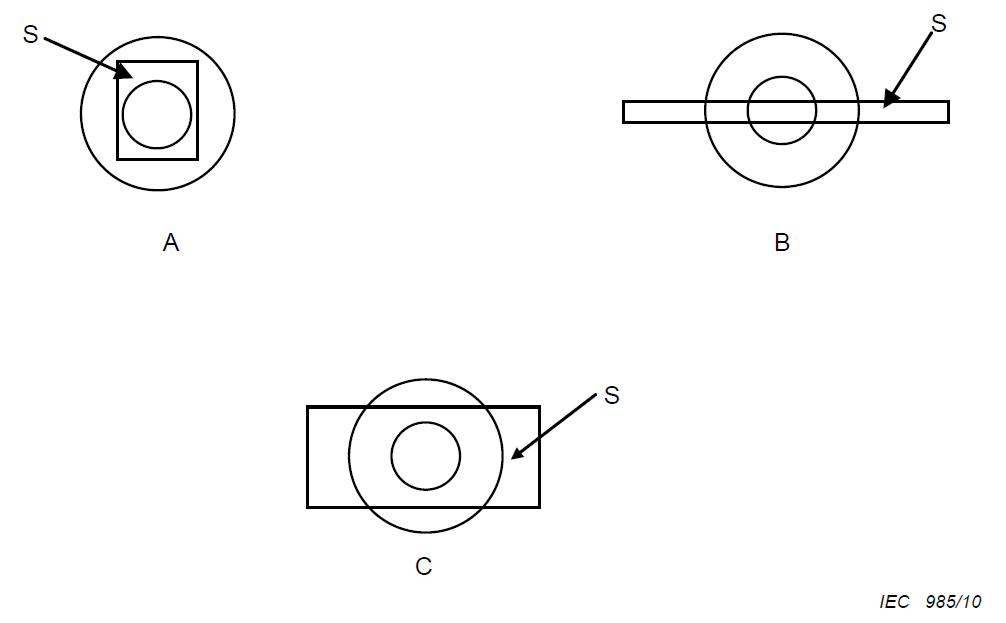
small part: part, where each surface lies completely within a circle of 15 mm diameter, or a part where some of the surface lies outside a 15 mm diameter circle but in such a way that it is not possible to fit a circle of 8 mm diameter on any of the surfaces.
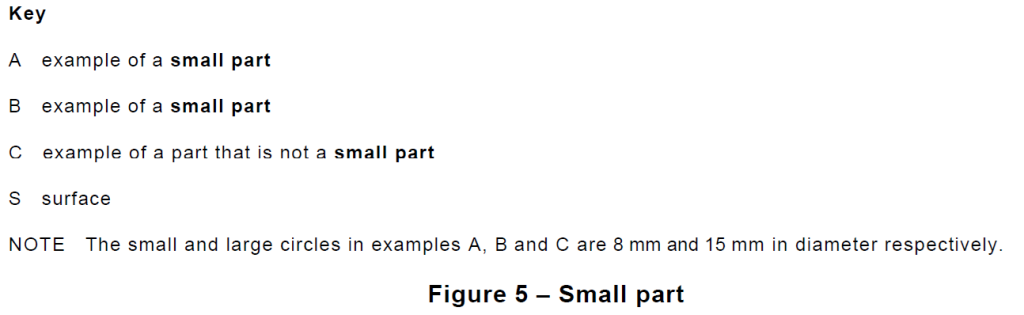
NOTE A part that is too small to grip and at the same time to be able to apply the glow-wire tip is shown in example A in Figure 5. A part that is large enough to grip but that is too small to be able to apply the glow-wire tip is shown in example B in Figure 5. A part that is not a small part is shown in example C in Figure 5.

The difference between small part and not a small part has been very well illustrated in Figure 5. Special attention should be paid here to the fact that every surface of the object needs to be considered when determining.
In the case of hollow structural members, or semi-hollow structural members, it is necessary to lay the parts out flat to make a determination.

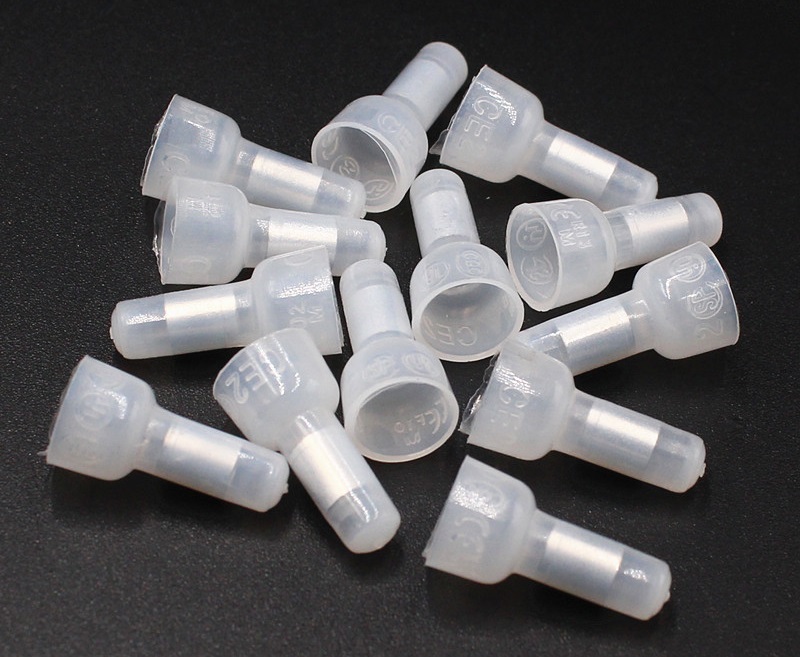
A teat connector with a semi-hollow structure, as shown in the picture, is not a small part.
Similar Posts

  • ข้อ 3 – วิธีทำความเข้าใจคำจำกัดความของ “ความปลอดภัยแรงดันไฟฟ้าต่ำพิเศษ”

    หมายเหตุ 2 แรงดันไฟฟ้าต่ำพิเศษเพื่อความปลอดภัยเรียกอีกอย่างว่า SELVจากชื่อ – แรงดันไฟฟ้าต่ำพิเศษด้านความปลอดภัย คำจำกัดความนี้มีคำว่า “ความปลอดภัย” มากกว่าแรงดันไฟฟ้าต่ำพิเศษ อย่างไรก็ตาม ในมาตรฐานนี้ เราได้อธิบายไว้ก่อนหน้านี้แล้วว่าแนวคิดเรื่องความปลอดภัยเป็นแนวคิดที่สัมพันธ์กัน ซึ่งได้รับการอธิบายไว้ในคำนำ-1 ที่นี่ เราต้องเพิ่มเติมว่า SELV มีข้อบังคับเกี่ยวกับค่าแรงดันไฟฟ้า แรงดันไฟฟ้าที่ระบุในที่นี้คือค่าประสิทธิผลของแรงดันไฟฟ้า โดยปกติ ค่าพีคของแรงดันไฟฟ้าจะสูงกว่าค่าประสิทธิผล และขีดจำกัดแรงดันไฟฟ้าที่ระบุในข้อ 8.1.4 เป็นข้อกำหนดสำหรับค่าพีค เราจะอธิบายข้อกำหนดการทดสอบโดยละเอียดในข้อ 8.1.4 หมายเหตุ 2 ของย่อหน้าแรกในข้อ 3 ให้ประโยค “หมายเหตุ 2 เมื่อใช้เงื่อนไข “แรงดันไฟฟ้า” และ “ปัจจุบัน” จะมีค่า r.m.s. เว้นแต่จะระบุไว้เป็นอย่างอื่น” ดังแสดงในรูปด้านล่าง หม้อแปลงไฟฟ้ามีขายึดพลาสติกสามตัววางในแนวตั้งลงในแผ่นดิสก์เพื่อแยกขดลวดปฐมภูมิและขดลวดทุติยภูมิ (ขดลวดปฐมภูมิและขดลวดทุติยภูมิถูกพันด้วยเทปพลาสติกสีน้ำเงินด้านนอก) และขดลวดปฐมภูมิและขดลวดทุติยภูมิคือ แยกตัวออกจากร่างกายเราจะอธิบายโครงสร้างของหม้อแปลงแยกความปลอดภัยโดยละเอียดในโพสต์ถัดไป Here, we need to add that SELV has regulations on voltage…

  • How are the creepage distances and electrical clearances of PTC heating element surfaces determined?

    We are discussing here the second structure of the PTC heating element, PTC heating element structure please refer to the explanation of its definition. How is the creepage distance of the functional insulation at the location of the red circle in Figure 1 determined? We all know that NOTE 1 of TABLE 18 section has…

  • ข้อ 3 – วิธีทำความเข้าใจคำจำกัดความของ “การก่อสร้างประเภท 3”

    หมายเหตุ อาจจำเป็นต้องใช้ฉนวนพื้นฐานเพิ่มเติมจากการจัดหาที่ SELV อ้างถึง 8.1.4.หมายเหตุ 2 ถ้าส่วนหลักของเครื่องใช้ไฟฟ้าทำงานที่ SELV และจัดส่งพร้อมกับหน่วยจ่ายไฟแบบถอดได้ ส่วนหลักของเครื่องใช้ไฟฟ้านี้ถือเป็นโครงสร้างประเภท III ในเครื่องใช้ไฟฟ้าประเภท I หรือเครื่องใช้ไฟฟ้าประเภท II ตามความเหมาะสม ที่นี่ ขอย้ำอีกครั้งว่าเน้นที่ส่วนหนึ่งของอุปกรณ์ คำอธิบายในหมายเหตุ 1 มีความเข้มงวดมากขึ้น เนื่องจากคำจำกัดความในที่นี้กำหนดแรงดันไฟฟ้าต่ำพิเศษเพื่อความปลอดภัย แต่แรงดันไฟฟ้าต่ำพิเศษเพื่อความปลอดภัยเป็นเพียงส่วนหนึ่งที่สามารถสัมผัสได้ ถ้าเป็นไปตามข้อกำหนดในข้อ 8.1.4 เครื่องใช้ไฟฟ้าใช้พลังงานจากอะแดปเตอร์แบบเสียบได้ (ไม่มีสายดินป้องกัน) และอะแดปเตอร์และอุปกรณ์จะถูกส่งไปยังผู้ใช้ร่วมกัน อะแดปเตอร์และเครื่องใช้ไฟฟ้ารวมกันถือเป็นเครื่องใช้ไฟฟ้าประเภท II เนื่องจากอะแดปเตอร์เป็น Class II จึงกำหนดระดับการป้องกันไฟฟ้าช็อต อย่างไรก็ตาม อุปกรณ์ที่มีพัดลมเพียงอย่างเดียวนั้นเป็นโครงสร้าง Class III ซึ่งเป็นโครงสร้าง Class III ในเครื่องใช้ไฟฟ้า Class II แน่นอนว่า มีอีกสถานการณ์หนึ่ง นั่นคือ PCB ของแหล่งจ่ายไฟแบบสวิตช์ถูกฝังอยู่ในอุปกรณ์ และ PCB ของแหล่งจ่ายไฟแบบสวิตช์นี้สามารถให้วงจร SELV ได้ จากนั้น…

  • Clause 3 – How to understand the definition of “thermal link”

    thermal link: thermal cut-out which operates only once and requires partial or complete replacement It is a temperature sensing device, but it can only be operated once, when the temperature is higher than its set value, it will disconnect, and after disconnection, the current can not pass through, so as to play the role of…

  • Clause 3 – How to Understand the Definition of “all-pole disconnection”

    all-pole disconnection: disconnection of both supply conductors by a single initiating action or, for multi-phase appliances, disconnection of all supply conductors by a single initiating actionNOTE For multi-phase appliances, the neutral conductor is not considered to be a supply conductor. Single-phase power: An AC power system composed of one live wire and one neutral wire.​Three-phase…

  • Clause 3 – How to understand the definition of “electronic component”

    electronic circuit: circuit incorporating at least one electronic component. The standard references electronic circuits in clause 19.11, clause 19.11.1, and clause 22.5. These requirements are additional to those for electronic circuits. The standard recognizes that electronic circuits alone cannot provide adequate protection. Electronic circuits may be susceptible to interference and malfunction, or they may be…