|

If the PCB is sealed with solid sealant, how to determine the creepage distance and clearance?
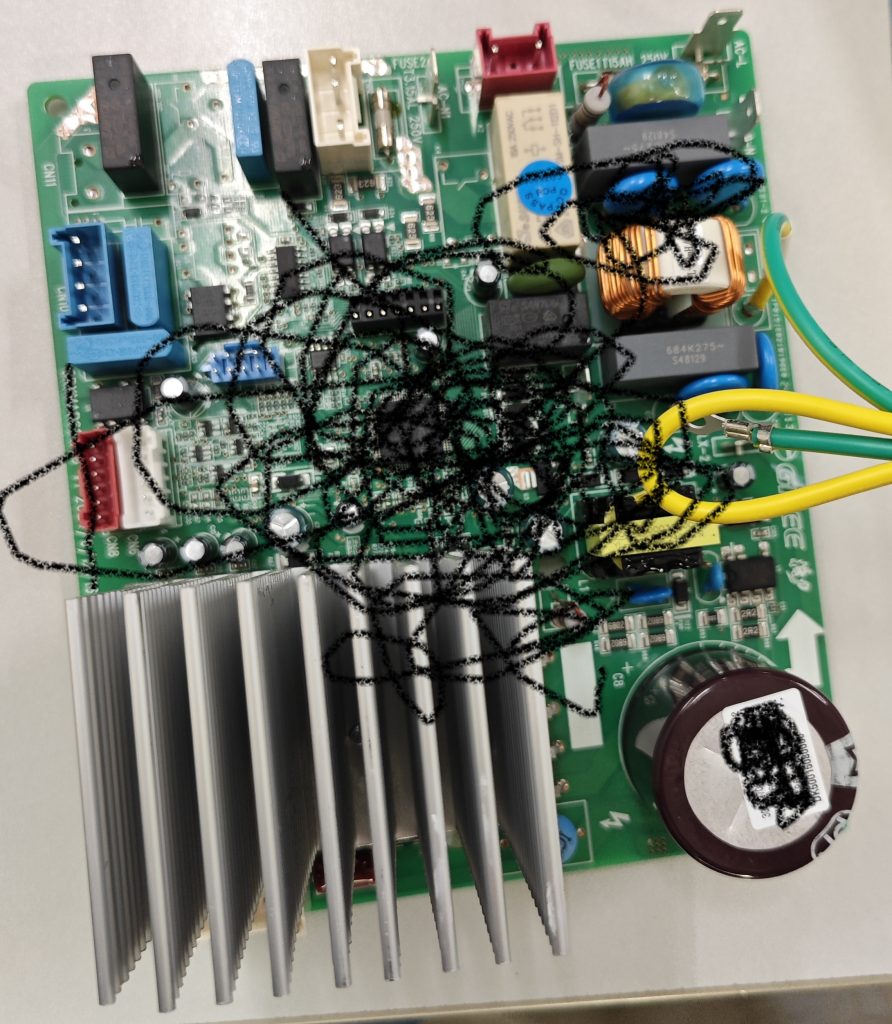
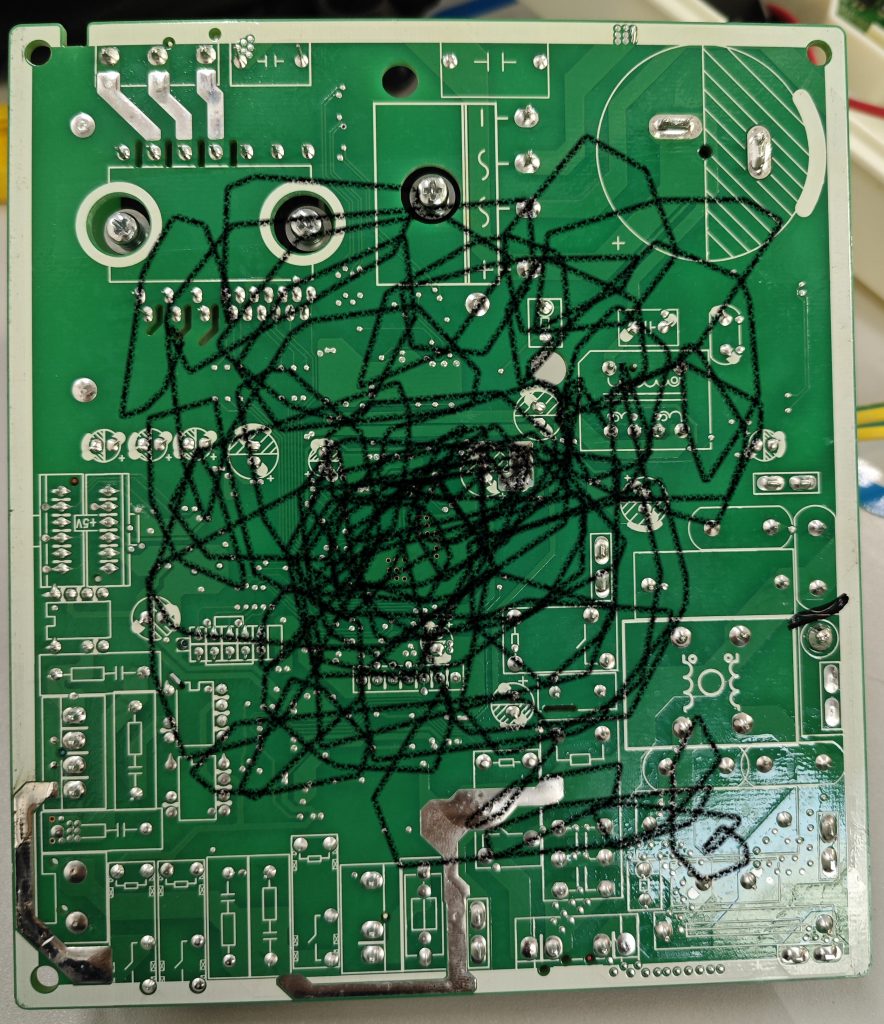
functional insulation as well as other insulation exists on circuit boards. Typically, the surface environment of a circuit board is determined to be either Pollution degree 3 or pollution degree 2.
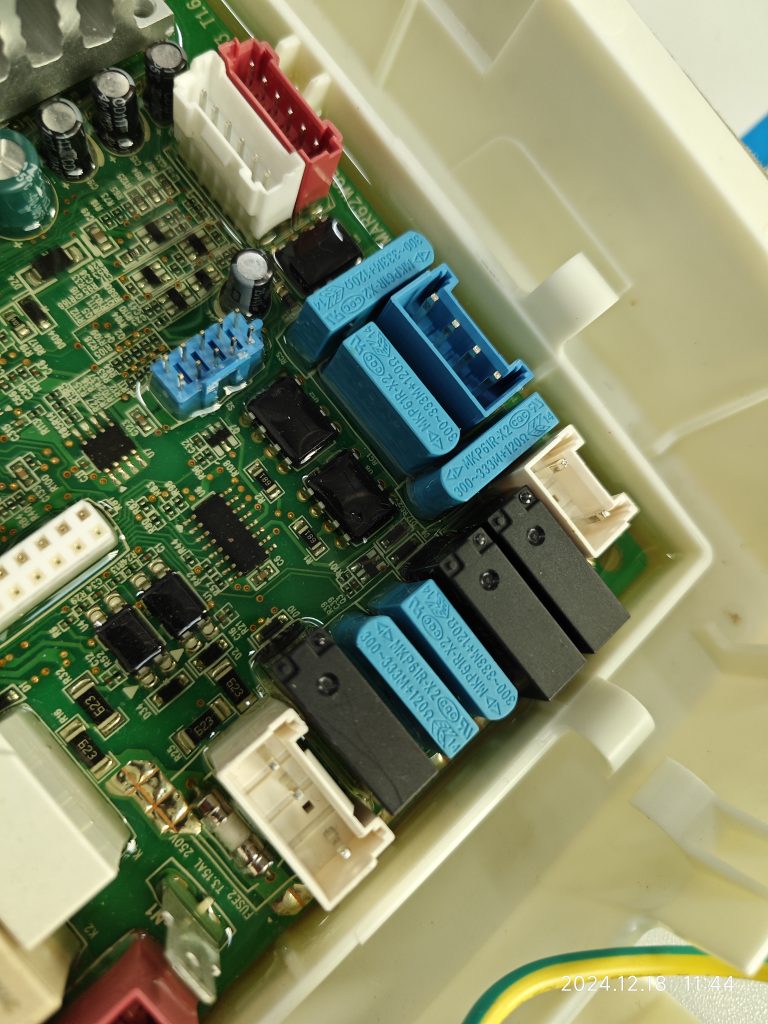
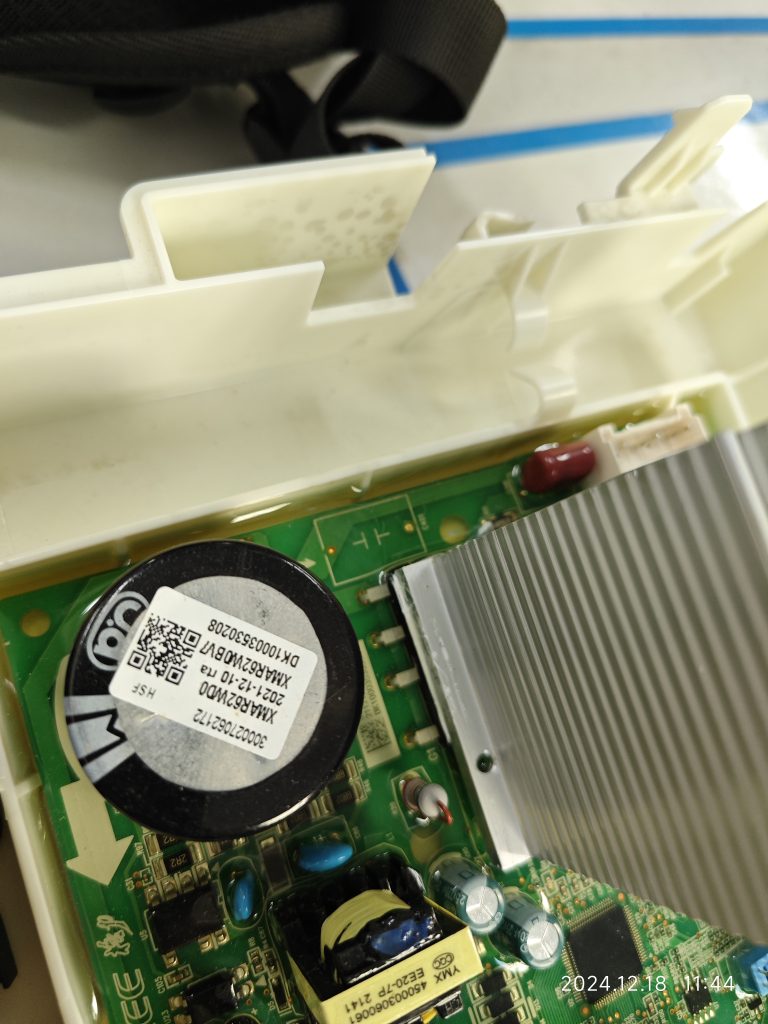
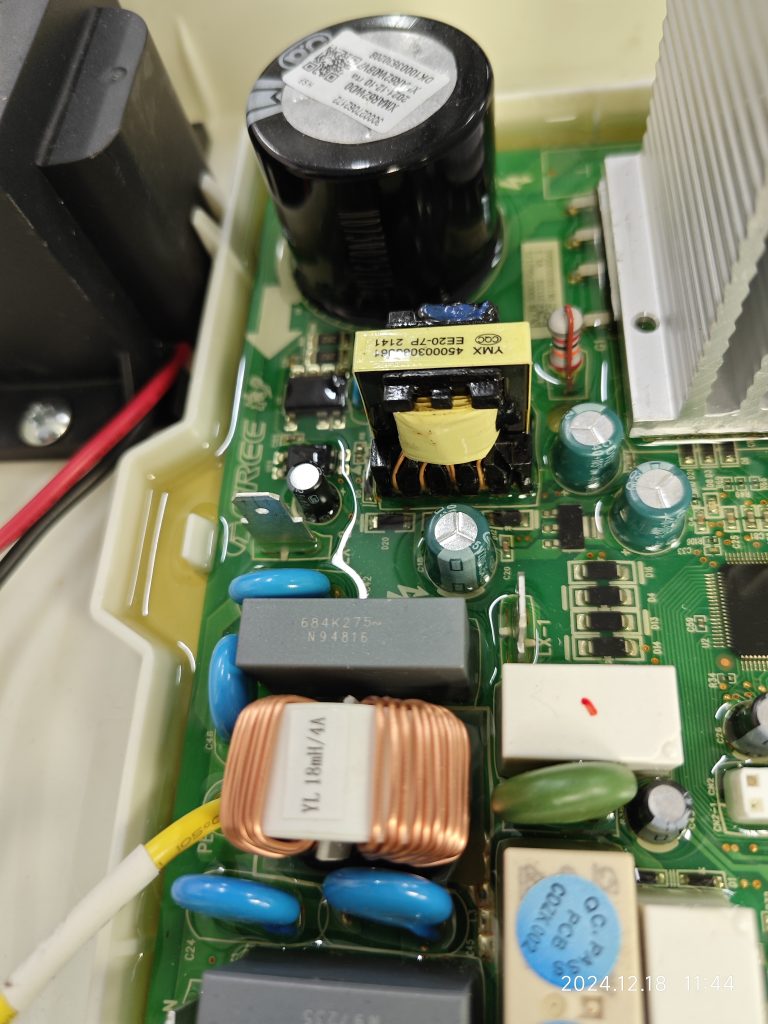
If the circuit board is mounted in an electrical box and sealed with a solid sealant, the sealing will look as follows:
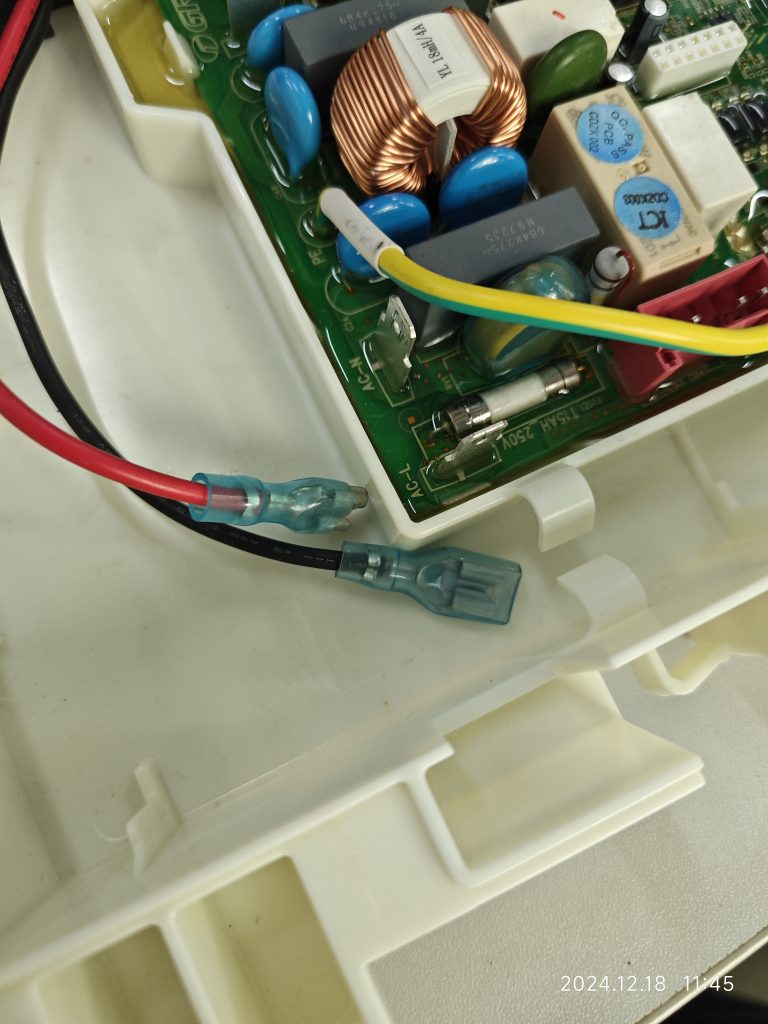
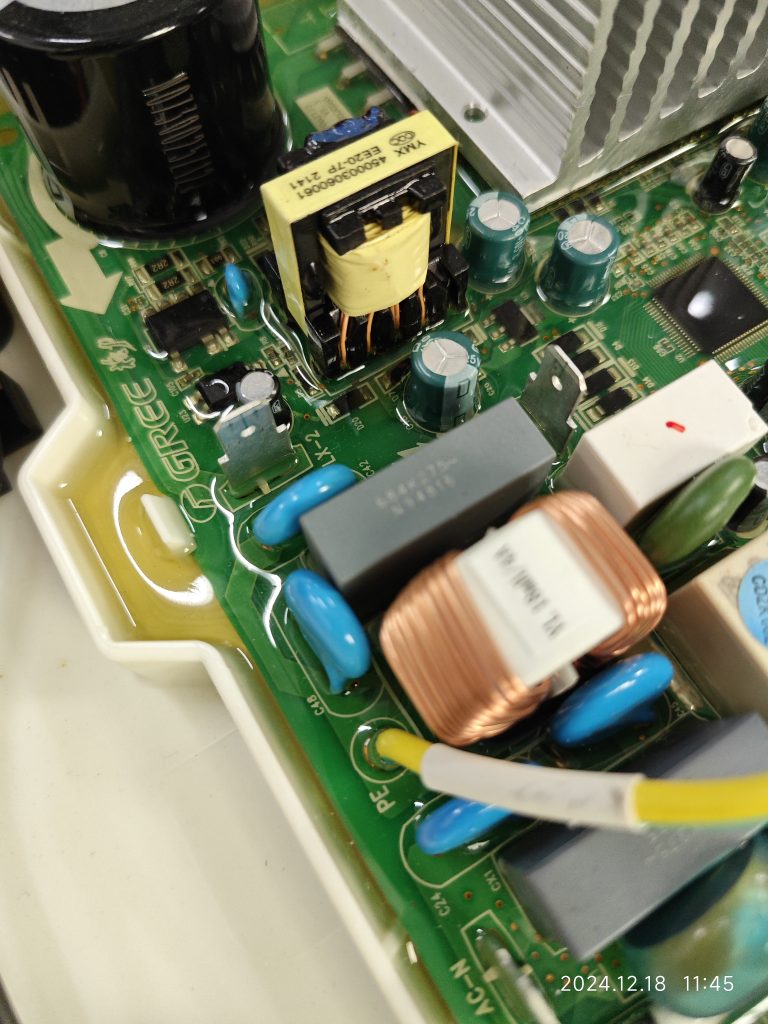
What should be the pollution degree of the functional insulation between the copper tracks on the PCB and between the energized parts on the component?
Here, the functional insulation is located inside the solid sealant and there is no contact between the path of the functional insulation and the outside air. According to the definition of electrical clearance, it can be assumed that there is no electrical clearance here. At the same time, the creepage distance is defined along the surface of the insulation, and obviously, there is no surface here either.
It may be argued that there is still a gap between the solid sealant and the PCB material, and that an clearance and creepage distance can be formed, but it is a pollution degree 1. This view is more conservative, because even if a gap is formed, it is not a continuous gap.
At the same time, the pictures show that this solid state sealant fills so well that it is essentially impossible to create a gap. The manufacturer also indicates that there is a vacuuming procedure prior to filling the solid state sealant. When we evaluate this type of structure, we can have some control over the material and specification of the solid state sealant, as well as some control over the filling process.
There may also be reinforced insulation internally, as there are isolation measures between the 220-240V circuit portion and the SELV circuit, which are judged by the same rules for clearance and creepage distances as functional insulation.

Similar Posts

  • How are the creepage distances and electrical clearances of PTC heating element surfaces determined?

    We are discussing here the second structure of the PTC heating element, PTC heating element structure please refer to the explanation of its definition. How is the creepage distance of the functional insulation at the location of the red circle in Figure 1 determined? We all know that NOTE 1 of TABLE 18 section has…

  • ข้อ 3 – จะเข้าใจคำจำกัดความของ “ความต้านทานเชิงป้องกัน” ได้อย่างไร

    กรณีที่ 1: อิมพีแดนซ์ป้องกันทั้งสองเชื่อมต่อระหว่างขดลวดปฐมภูมิและขดลวดทุติยภูมิของหม้อแปลง T2 เส้นประในรูปด้านล่างแสดงถึงการแยกระหว่างส่วนแรงดันไฟฟ้าทำงาน 220-240V และส่วนแรงดันไฟฟ้าทำงานต่ำ (SELV)รูปด้านล่างคือแผนภาพวงจรของเครื่องกำเนิดไอออนลบ ตัวต้านทานสองตัวที่เลือกโดยสี่เหลี่ยมสีแดงนั้นเป็นอิมพีแดนซ์ในการป้องกันโดยทั่วไป ในภาพด้านล่าง มีอิมพีแดนซ์ป้องกัน CY1 และ CY2 หรือไม่ จากคำจำกัดความของมาตรฐาน อิมพีแดนซ์ป้องกันถูกใช้ในโครงสร้างประเภท II ที่มีการต่อสายดิน หากการต่อสายดินที่นี่ถูกกำหนดให้เป็นการต่อสายดินการป้องกัน เห็นได้ชัดว่า CY1 และ CY2 ไม่สามารถกำหนดเป็นอิมพีแดนซ์การป้องกันได้ เนื่องจากอิมพีแดนซ์การป้องกันถูกใช้ในการก่อสร้างคลาส II และนี่คือการก่อสร้างคลาส I ถ้าการต่อสายดินและ nbsp;ในที่นี้ถูกกำหนดให้เป็นการต่อสายดินเชิงฟังก์ชัน แสดงว่ามีปัญหาสองประการ ประการแรก นี่คือโครงสร้างคลาส I ดังนั้น CY1 และ CY2 จึงไม่สามารถกำหนดเป็นอิมพีแดนซ์การป้องกันได้ ประการที่สอง หากเป็นโครงสร้างคลาส II ก็สามารถกำหนด CY1 และ CY2 เป็นอิมพีแดนซ์การป้องกันได้ จากนั้นจึงจำเป็นต้องปฏิบัติตามข้อกำหนดที่เกี่ยวข้องของอิมพีแดนซ์การป้องกัน ความเห็นส่วนตัวของฉันคือ CY1 และ CY2 ไม่ใช่อิมพีแดนซ์ป้องกัน และเราสามารถถือเป็นฉนวนพื้นฐานได้โดยตรง…

  • Clause 3 – How to understand the definition of “non-detachable part”

    non-detachable-part: part that can only be removed or opened with the aid of a tool or a part that fulfils the test of 22.11. The definition of this concept is mainly for the judgment of clause 8 and clause 20, and the judgment of other clauses may also be used. On the appliance, whether any…

  • ข้อ 3 – วิธีทำความเข้าใจคำจำกัดความของ “กระแสไฟฟ้าที่ได้รับการจัดอันดับ”

    หมายเหตุ หากไม่มีการกำหนดกระแสไฟฟ้าให้กับเครื่องใช้ไฟฟ้า กระแสไฟที่กำหนดจะเป็น– สำหรับเครื่องทำความร้อน กระแสไฟฟ้าคำนวณจากกำลังไฟเข้าที่กำหนดและแรงดันไฟฟ้าที่กำหนด– สำหรับเครื่องใช้ไฟฟ้าที่ทำงานด้วยมอเตอร์และเครื่องใช้ไฟฟ้าแบบรวม กระแสไฟฟ้าที่วัดได้เมื่อจ่ายเครื่องใช้ไฟฟ้าด้วยแรงดันไฟฟ้าที่กำหนดและทำงานภายใต้การทำงานปกติ สิ่งนี้สอดคล้องกับกำลังไฟฟ้าเข้าที่กำหนด และถูกกำหนดในลักษณะเดียวกับกำลังไฟฟ้าเข้าที่กำหนด หมายเหตุแรกของข้อนี้ เครื่องทำความร้อน เนื่องจากมีเพียงองค์ประกอบความร้อนไฟฟ้าเพื่อให้ความร้อนเท่านั้น องค์ประกอบความร้อนนี้โดยพื้นฐานแล้วจะมีโหลดความต้านทานเพียงอย่างเดียว ดังนั้นคุณจึงสามารถปฏิบัติตามวิธีการคำนวณทางคณิตศาสตร์ได้โดยตรง เนื่องจากกระแสจะเท่ากับกำลังไฟฟ้าเข้าที่หาร โดยแรงดันไฟฟ้าที่กำหนด (P = U/I) หมายเหตุประการที่สอง เนื่องจากผลิตภัณฑ์ไม่ใช่โหลดที่มีความต้านทานเพียงอย่างเดียว ดังนั้นตามสูตรการคำนวณ P = U/I จึงไม่ได้ให้ผลลัพธ์ที่ถูกต้อง มีเพียงการทดสอบเพื่อให้ได้ค่าปัจจุบันเท่านั้นโดยทั่วไปมีบ้างเครื่องใช้ไฟฟ้าที่ทำงานด้วยมอเตอร์ มีป้ายระบุพิกัดกระแสในป้ายพิกัด เช่น ตู้เย็น เครื่องปรับอากาศส่วนใหญ่จะมีทั้งกำลังไฟเข้าพิกัดและกระแสไฟพิกัดบนป้ายพิกัด ฉลากจัดอันดับสำหรับตู้เย็น ป้ายเรตติ้งเครื่องปรับอากาศ rating label for air conditioner

  • ข้อ 3 – วิธีทำความเข้าใจคำจำกัดความของ “เรต” ในข้อ 3.1.1 – 3.1.8

    เพื่อสรุปจุดประสงค์ของมาตรฐาน “ เรต” แสดงถึงชุดพารามิเตอร์ที่กำหนดให้กับเครื่องใช้ไฟฟ้าโดยผู้ผลิตตามข้อกำหนดของข้อ 7 พารามิเตอร์บางตัวในกลุ่มที่ได้รับการจัดอันดับนี้มักจะต้องมีการทำเครื่องหมายบนฉลากการให้คะแนน ผู้ออกแบบผลิตภัณฑ์จะกำหนดพารามิเตอร์เหล่านี้ตามความต้องการของผู้ใช้ แรงดันไฟฟ้าและความถี่ที่กำหนดจะถูกกำหนดตามเงื่อนไขของแหล่งจ่ายไฟฟ้าในสถานที่ที่จะใช้ผลิตภัณฑ์ และแตกต่างกันไปในแต่ละประเทศ ดังนั้นจึงจำเป็นต้องออกแบบผลิตภัณฑ์ตามเงื่อนไขของ ประเทศต่างๆ นี่คือข้อมูลอ้างอิง หน้าเว็บ คุณสามารถตรวจสอบข้อมูลสภาพแหล่งจ่ายไฟของเกือบทุกประเทศได้ กระแสไฟที่กำหนดหรือกำลังไฟที่กำหนดจะถูกกำหนดตามความต้องการของผู้ใช้ เช่น หากผู้ใช้ต้องการเครื่องทำความร้อนในห้องที่ทรงพลัง ผู้ออกแบบจะออกแบบเครื่องทำความร้อนในห้องที่มีกำลังไฟเข้าพิกัด 3000W ตามความต้องการของผู้ซื้อ ในทางกลับกัน นอกจากนี้ยังสามารถออกแบบสำหรับเครื่องทำความร้อนในห้องที่ใช้พลังงานต่ำมาก เช่น 500W หรือน้อยกว่าได้อีกด้วยก่อนที่เราจะทดสอบตามมาตรฐาน เราจำเป็นต้องยืนยันค่าพารามิเตอร์ที่กำหนด เนื่องจากการทดสอบจำนวนมากในมาตรฐานจะขึ้นอยู่กับค่าพารามิเตอร์ที่กำหนดเพื่อกำหนดเงื่อนไขการทดสอบ หากค่าพารามิเตอร์ที่กำหนดไม่ถูกต้อง ผลการทดสอบส่วนใหญ่ของเรา คงจะผิดแน่นอน.. Before we test according to the standard, we need to confirm the rated parameter values, because many tests in the standard are based on the…

  • Clause 3 – How to Understand the Definition of “Intentionally Weak Part”

    intentionally weak part: A part intended to rupture under abnormal operating conditions to prevent the occurrence of a condition that could impair compliance with this standard.NOTE: Such a part may be a replaceable component, such as a resistor or capacitor, or a part of a component to be replaced, such as an inaccessible thermal link