Clause 3 – How to understand the definition of “protective electronic circuit”

protective electronic circuit: electronic circuit that prevents a hazardous situation under abnormal operating conditions.
NOTE Parts of the circuit may also be used for functional purposes.

With the advancement of technology, more and more electronic circuits are being used in household electrical products, and these electronic circuits are usually integrated on PCBs. They use microprocessor chips and their burned-in programmes to complete the established functions, which include some regular operating functions and also some protective functions, which are defined as prevents a hazardous situation under abnormal operating conditions.

Generally speaking, it is difficult to distinguish which part of the circuit is protective electronic circuit, usually we will first carry out the abnormal test in clause 19, through the test phenomenon to determine whether there is an electronic circuit involved in the protective function, if there is, we need to find out which part of the circuit is protective electronic circuit according to the circuit schematic diagram and the test phenomenon. If so, we need to find out which part of the circuit is protective electronic circuit according to the schematic diagram and the test phenomenon, which requires analysts to have basic knowledge of circuits. Annex Q (informative) Sequence of tests for the evaluation of electronic circuits gives a flowchart for the evaluation of electronic circuits and protective electronic circuits. clearer.
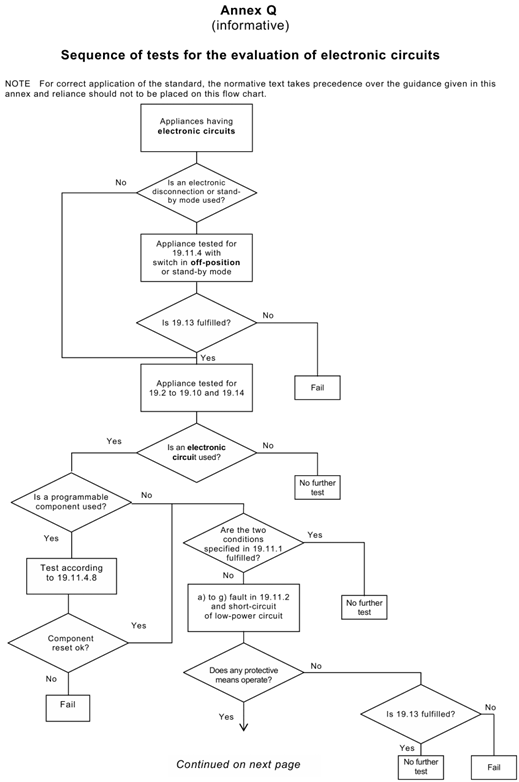
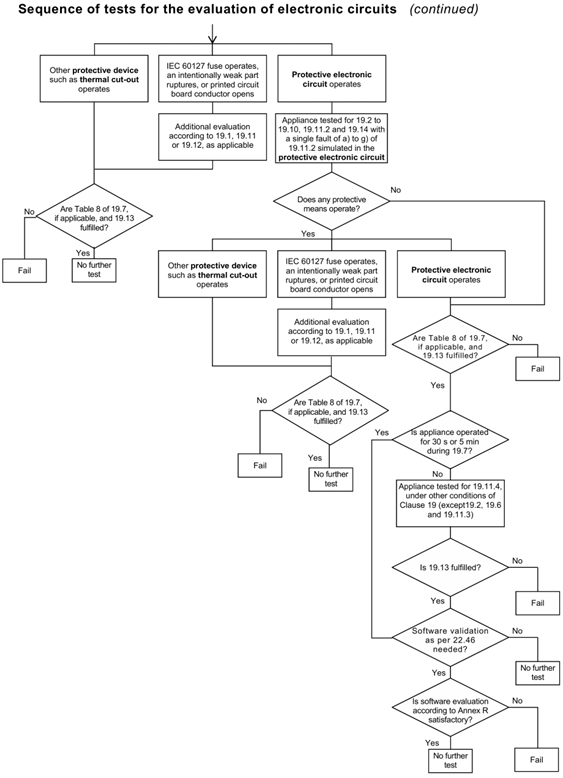
Annex Q

Similar Posts

  • Clause 3 – How to understand the definition of “self-resetting thermal cut-out”

    self-resetting thermal cut-out: thermal cut-out that automatically restores the current after the relevant part of the appliance has cooled down sufficiently In the definition there is a clear mention, when the temperature is cooled to a certain degree, in fact, its intention is to control the temperature is not too high, when the temperature is…

  • ข้อ 3 – วิธีทำความเข้าใจคำจำกัดความของ “กำลังไฟฟ้าเข้าพิกัด”

    กำลังไฟฟ้าเข้าที่ผู้ผลิตกำหนดให้กับเครื่องหมายเหตุ 1: ถ้าไม่ได้กำหนดกำลังไฟฟ้าเข้าให้กับเครื่องใช้ไฟฟ้า กำลังไฟฟ้าเข้าที่กำหนดสำหรับเครื่องทำความร้อนและเครื่องใช้ไฟฟ้าแบบรวมจะเป็นกำลังไฟฟ้าเข้าที่วัดเมื่อจ่ายเครื่องใช้ไฟฟ้าที่แรงดันไฟฟ้าที่กำหนดและทำงานภายใต้การทำงานปกติในกรณีส่วนใหญ่ อุปกรณ์จะได้รับกำลังไฟฟ้าเข้าที่กำหนด บางครั้ง ผลิตภัณฑ์จะได้รับเฉพาะกระแสไฟเข้าที่กำหนดเท่านั้น แต่ในระหว่างการทดสอบจริง มาตรฐานกำหนดให้ต้องพิจารณาสภาพการทำงานของผลิตภัณฑ์ตามกำลังไฟฟ้าเข้าที่กำหนด จากนั้นจึงจะสามารถกำหนดข้อมูลกำลังไฟฟ้าเข้าตามข้อมูลในหมายเหตุนี้ได้ นี่เป็นสถานการณ์ที่หายาก หากเงื่อนไขการทดสอบของผลิตภัณฑ์เป็นไปตามกำลังไฟฟ้าเข้าที่กำหนด โดยปกติแล้วผลิตภัณฑ์จะมีป้ายกำกับว่ากำลังไฟฟ้าเข้าที่กำหนด แม้ว่าผู้ผลิตผลิตภัณฑ์จะไม่ระบุพิกัดกำลังไฟฟ้าเข้า แต่ห้องปฏิบัติการทดสอบของบุคคลที่สามมักจะขอข้อมูลพิกัดกำลังไฟฟ้าเข้าเมื่อทำการทดสอบผลิตภัณฑ์ ต่อไปนี้คือตัวอย่างสมมุติของเครื่องทำความร้อนในห้องที่ใช้หลอดควอทซ์ซึ่งมีป้ายกำกับว่ามีแรงดันไฟฟ้าพิกัด AC220V และอินพุตกระแสไฟพิกัดอยู่ที่ 10A โดยไม่มีกำลังไฟเข้าพิกัด เมื่อทำการทดสอบความร้อนตามข้อ 11 มาตรฐานกำหนดให้ผลิตภัณฑ์ทำงานที่ 1.15 เท่าของกำลังไฟฟ้าเข้าที่กำหนด ในสถานการณ์นี้ สามารถกำหนดกำลังไฟฟ้าเข้าพิกัดได้โดยใช้ข้อมูลในหมายเหตุของบทความนี้ อุปกรณ์ทำความร้อนมักจะทำเครื่องหมายกำลังไฟฟ้าเข้าพิกัด In most cases, the appliance is given a rated powerinput. Sometimes, the product is only given a rated input current, but during actual testing, standards require that…

  • ข้อ 3 – วิธีทำความเข้าใจคำจำกัดความของ “กระแสไฟฟ้าที่ได้รับการจัดอันดับ”

    หมายเหตุ หากไม่มีการกำหนดกระแสไฟฟ้าให้กับเครื่องใช้ไฟฟ้า กระแสไฟที่กำหนดจะเป็น– สำหรับเครื่องทำความร้อน กระแสไฟฟ้าคำนวณจากกำลังไฟเข้าที่กำหนดและแรงดันไฟฟ้าที่กำหนด– สำหรับเครื่องใช้ไฟฟ้าที่ทำงานด้วยมอเตอร์และเครื่องใช้ไฟฟ้าแบบรวม กระแสไฟฟ้าที่วัดได้เมื่อจ่ายเครื่องใช้ไฟฟ้าด้วยแรงดันไฟฟ้าที่กำหนดและทำงานภายใต้การทำงานปกติ สิ่งนี้สอดคล้องกับกำลังไฟฟ้าเข้าที่กำหนด และถูกกำหนดในลักษณะเดียวกับกำลังไฟฟ้าเข้าที่กำหนด หมายเหตุแรกของข้อนี้ เครื่องทำความร้อน เนื่องจากมีเพียงองค์ประกอบความร้อนไฟฟ้าเพื่อให้ความร้อนเท่านั้น องค์ประกอบความร้อนนี้โดยพื้นฐานแล้วจะมีโหลดความต้านทานเพียงอย่างเดียว ดังนั้นคุณจึงสามารถปฏิบัติตามวิธีการคำนวณทางคณิตศาสตร์ได้โดยตรง เนื่องจากกระแสจะเท่ากับกำลังไฟฟ้าเข้าที่หาร โดยแรงดันไฟฟ้าที่กำหนด (P = U/I) หมายเหตุประการที่สอง เนื่องจากผลิตภัณฑ์ไม่ใช่โหลดที่มีความต้านทานเพียงอย่างเดียว ดังนั้นตามสูตรการคำนวณ P = U/I จึงไม่ได้ให้ผลลัพธ์ที่ถูกต้อง มีเพียงการทดสอบเพื่อให้ได้ค่าปัจจุบันเท่านั้นโดยทั่วไปมีบ้างเครื่องใช้ไฟฟ้าที่ทำงานด้วยมอเตอร์ มีป้ายระบุพิกัดกระแสในป้ายพิกัด เช่น ตู้เย็น เครื่องปรับอากาศส่วนใหญ่จะมีทั้งกำลังไฟเข้าพิกัดและกระแสไฟพิกัดบนป้ายพิกัด ฉลากจัดอันดับสำหรับตู้เย็น ป้ายเรตติ้งเครื่องปรับอากาศ rating label for air conditioner

  • ข้อ 3 – วิธีทำความเข้าใจคำจำกัดความของ “ไฟล์แนบประเภท X, ประเภท Y, ประเภท Z”

    สิ่งที่แนบประเภท X: การเชื่อมต่อสายไฟเสร็จสมบูรณ์ในพื้นที่ที่เตรียมไว้เป็นพิเศษในเครื่องใช้ไฟฟ้า ดังนั้นเมื่อเปลี่ยนสายไฟจะไม่สัมผัสส่วนอื่นใดนอกจากแผงขั้วต่อและสายภายใน สกรูที่ยึดสายไฟเป็นสกรูหัวแฉกหรือหัวแบนธรรมดา การเปลี่ยนสายไฟให้ดำเนินการภายในช่วงที่ควบคุมได้ สายไฟที่ผู้ใช้ทั่วไปแทนที่นั้นค่อนข้างเรียบง่ายและใช้งานได้ การแนบประเภท Y: เมื่อเปลี่ยนสายไฟ โดยทั่วไปจำเป็นต้องเปิดโครงโครงสร้างของเครื่องใช้ไฟฟ้า และยึดตัวเรือนเหล่านี้ด้วยสกรูพิเศษ เช่น สกรูหกเหลี่ยม หลังจากเปิดโครงโครงสร้างของเครื่องแล้ว ชิ้นส่วนทดแทนอาจสัมผัสชิ้นส่วนที่เคลื่อนไหวที่เป็นอันตรายหรือชิ้นส่วนอื่นๆ ที่มีไฟฟ้าภายในเครื่องได้ ในกรณีนี้ จะปลอดภัยกว่าหากกำหนดการเชื่อมต่อเป็นเอกสารแนบประเภท Y และกำหนดให้ผู้เชี่ยวชาญเปลี่ยนสายไฟ โดยปกติแล้ว สกรูยึดจะเป็นสกรูธรรมดาที่ผู้ใช้ทั่วไปสามารถใช้งานได้ แต่หากสัมผัสชิ้นส่วนที่เป็นอันตรายได้ในระหว่างการเปลี่ยนสายไฟ โดยทั่วไปจะกำหนดให้เป็นสิ่งที่แนบมาประเภท Y ไฟล์แนบประเภท Z ดูคำอธิบายและตัวอย่างใน 3.2.6. type Z attachment, see the explanation and examples in 3.2.6.

  • Clause 3 – How to understand the definition of “electronic component”

    electronic circuit: circuit incorporating at least one electronic component. The standard references electronic circuits in clause 19.11, clause 19.11.1, and clause 22.5. These requirements are additional to those for electronic circuits. The standard recognizes that electronic circuits alone cannot provide adequate protection. Electronic circuits may be susceptible to interference and malfunction, or they may be…

  • Clause 3 – How to understand the definition of “built-in appliance”

    built-in appliance: fixed appliance intended to be installed in a cabinet, in a prepared recess in a wall or in a similar location. Here, because the appliance must be installed in a reserved position (usually a cubic space with only one side open), it is a fixed installation and can be regarded as a fixed…