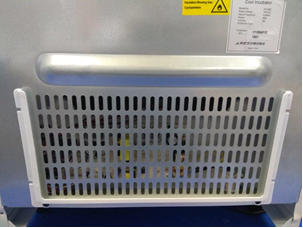
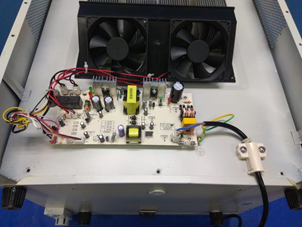
As shown in the two pictures below, the left picture is a photo of the back of a refrigerator. The circuit board inside can be seen through the metal grille in the left picture, and the internal photo is the right picture. There are live parts on the PCB, and the user can touch the grille. The air between the gap of the grille and the live parts on the circuit board can form a conductive loop. Therefore, this distance can be determined as an clearance with reinforced insulation. Because the clearance is composed of an air loop, the air loop cannot be separated, and we don’t even know where to divide this air into several parts. Here, two points need to be noted. If the metal grille is not grounded, the air between the grille and the live parts in the circuit board needs to meet the requirements of reinforced insulation (according to the requirements of clause 8.2 for class II appliance), if the metal grille is grounded, then the air between the grille and the live parts in the circuit board only needs to meet the requirements of basic insulation, because basic insulation plus earthing is a class I appliance with double protection measures, and the user can touch the earthing metal parts.
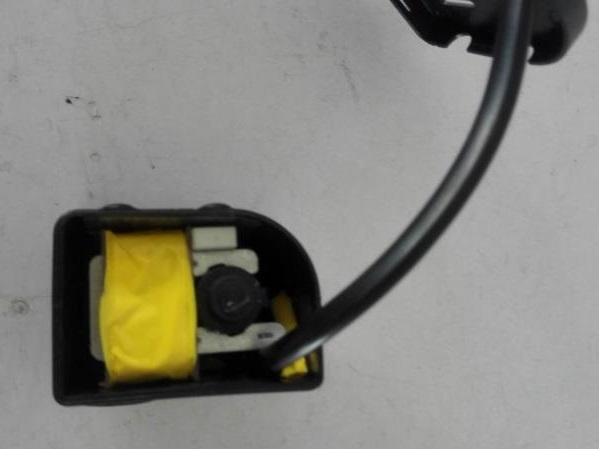
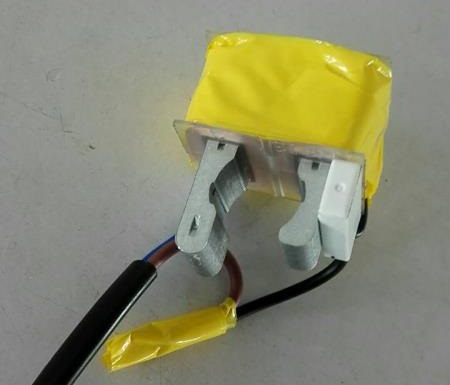
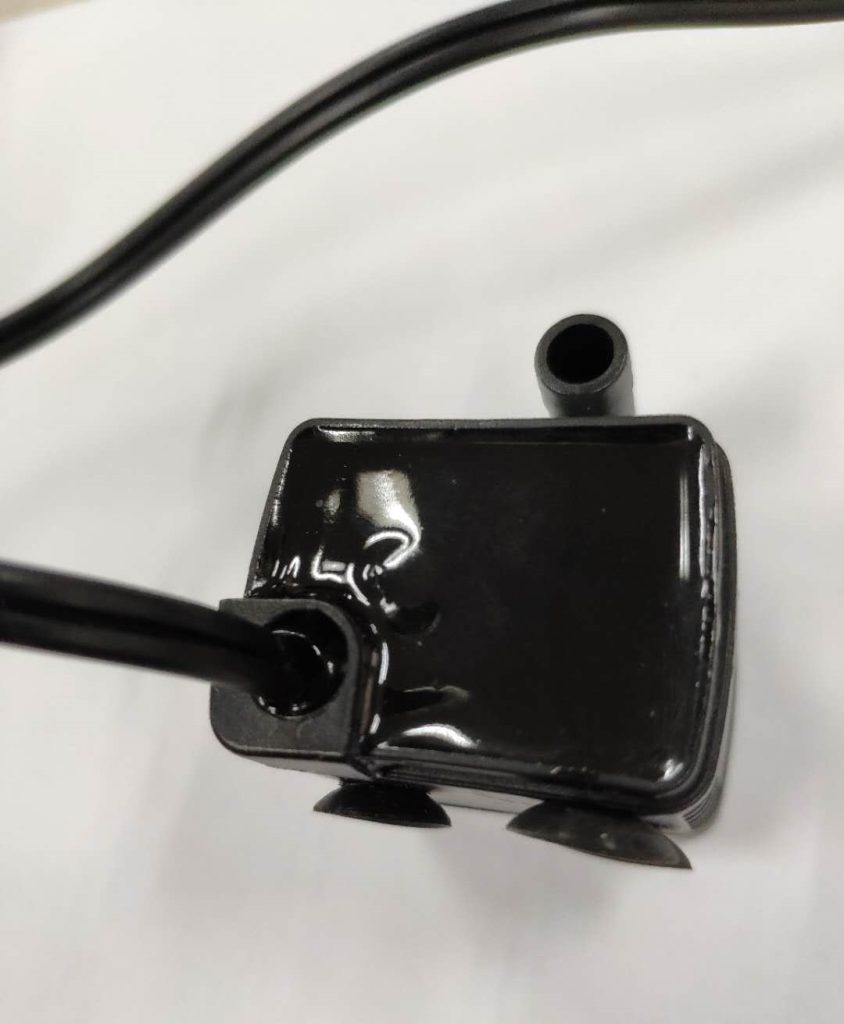
The submersible pump shown below has a shaded pole motor inside, with the windings wrapped in yellow insulation. To prevent water damage, the entire motor stator is wrapped in epoxy resin. After the windings are wrapped, it is not possible to effectively test the basic insulation and supplementary insulation. Before the epoxy resin is poured, the yellow insulation can be considered basic insulation and the epoxy resin can be considered supplementary insulation. However, when the epoxy resin is poured into the pump housing, it will adhere to the yellow insulation material very tightly, and the two materials cannot be separated for evaluation, such as evaluating electrical strength tests. Therefore, reinforced insulation is formed from the pump winding to the externally accessible epoxy resin surface.
สิ่งที่แนบประเภท X: การเชื่อมต่อสายไฟเสร็จสมบูรณ์ในพื้นที่ที่เตรียมไว้เป็นพิเศษในเครื่องใช้ไฟฟ้า ดังนั้นเมื่อเปลี่ยนสายไฟจะไม่สัมผัสส่วนอื่นใดนอกจากแผงขั้วต่อและสายภายใน สกรูที่ยึดสายไฟเป็นสกรูหัวแฉกหรือหัวแบนธรรมดา การเปลี่ยนสายไฟให้ดำเนินการภายในช่วงที่ควบคุมได้ สายไฟที่ผู้ใช้ทั่วไปแทนที่นั้นค่อนข้างเรียบง่ายและใช้งานได้ การแนบประเภท Y: เมื่อเปลี่ยนสายไฟ โดยทั่วไปจำเป็นต้องเปิดโครงโครงสร้างของเครื่องใช้ไฟฟ้า และยึดตัวเรือนเหล่านี้ด้วยสกรูพิเศษ เช่น สกรูหกเหลี่ยม หลังจากเปิดโครงโครงสร้างของเครื่องแล้ว ชิ้นส่วนทดแทนอาจสัมผัสชิ้นส่วนที่เคลื่อนไหวที่เป็นอันตรายหรือชิ้นส่วนอื่นๆ ที่มีไฟฟ้าภายในเครื่องได้ ในกรณีนี้ จะปลอดภัยกว่าหากกำหนดการเชื่อมต่อเป็นเอกสารแนบประเภท Y และกำหนดให้ผู้เชี่ยวชาญเปลี่ยนสายไฟ โดยปกติแล้ว สกรูยึดจะเป็นสกรูธรรมดาที่ผู้ใช้ทั่วไปสามารถใช้งานได้ แต่หากสัมผัสชิ้นส่วนที่เป็นอันตรายได้ในระหว่างการเปลี่ยนสายไฟ โดยทั่วไปจะกำหนดให้เป็นสิ่งที่แนบมาประเภท Y ไฟล์แนบประเภท Z ดูคำอธิบายและตัวอย่างใน 3.2.6. type Z attachment, see the explanation and examples in 3.2.6.
accessible part: part or surface that can be touched by means of test probe B of IEC 61032, and if the part or surface is metal, any conductive part connected to it.NOTE Accessible non-metallic parts with conductive coatings are considered to be accessible metal parts. There are some parts or surfaces in the appliance that…
functional insulation as well as other insulation exists on circuit boards. Typically, the surface environment of a circuit board is determined to be either Pollution degree 3 or pollution degree 2.If the circuit board is mounted in an electrical box and sealed with a solid sealant, the sealing will look as follows: What should be…
8.1.5 Live parts of built-in appliances, fixed appliances, and appliances delivered in separate units shall be protected by at least basic insulation before installation or assembly. Compliance is checked by inspection and the test in 8.1.1.Why is this requirement in place? I believe there are three types of hazards that require protection. The first is…
room temperature: ambient temperature specified in the general conditions for the tests.Note 1 to entry: The ambient temperature is specified in 5.7. This item comes from standard IEC 60335-1:2020 edition 6.0. In commented version (CMV) of the official standard IEC 60335-1:2020 edition 6.0 allows the user to identify the changes made to the previous edition…