Clause 3 – How to understand the definition of “accessible part”

accessible part: part or surface that can be touched by means of test probe B of IEC 61032, and if the part or surface is metal, any conductive part connected to it.
NOTE Accessible non-metallic parts with conductive coatings are considered to be accessible metal parts.

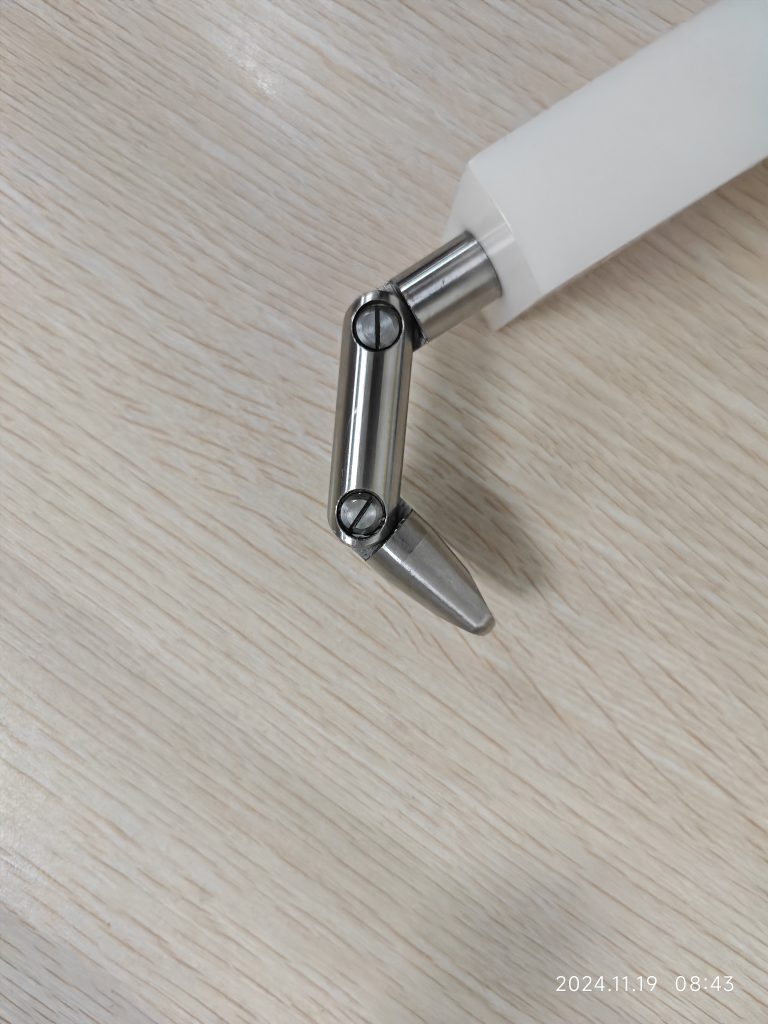
There are some parts or surfaces in the appliance that is not allowed be touched or be accessible, the reason for this may be high temperature, may be electrically charged, or there may be mechanical injuries, such as the movement of the fan blade. The smallest part of the human body that can touch other objects is the finger, but different people’s fingers are different, so the standard here stipulates a fixed size of the finger, finger size in accordance with the standard IEC 61032 in the type B finger. The following figure


It is also important to note here that if the part touched by the tested finger is metal, because metal conducts electricity, then parts such as those touched by metal parts are considered electrically accessible. In practice, the requirement that metal parts may be electrically conductive does not need to be taken into account when determining injuries to moving parts.

Type B test probes have a design that is without joints. Typically, standards will require that a test finger without joints be used first, followed by a test finger with joints. The exact method of inspection is discussed in clause 8.
Similar Posts

  • Clause 3 – How to understand the definition of “live part”

    live part: conductor or conductive part intended to be energized in normal use, including a neutral conductor but, by convention, not a PEN conductorNOTE 1 Parts, accessible or not, complying with 8.1.4 are not considered to be live parts.NOTE 2 A PEN conductor is a protective earthed neutral conductor combining the functions of both a…

  • Clause 3 – How to understand the definition of “protective device”

    protective device: device, the operation of which prevents a hazardous situation under abnormal operation conditions The standard emphasizes “abnormal operation” here. Only devices that operate under “abnormal operation” conditions can be defined as protective devices. Therefore, there are many types of protective devices, including overheating protection devices, overcurrent protection devices, and overpressure protection devices. Overheating…

  • 4 General Requirement

    4 General Requirement: Appliances shall be constructed so that in normal use, they function safely so as to cause no danger to persons or surroundings, even in the event of carelessness that may occur in normal use.In general, this principle is achieved by fulfilling the relevant requirements specified in this standard and compliance is checked…

  • ข้อ 3 – วิธีทำความเข้าใจคำจำกัดความของ “กำลังไฟฟ้าเข้าพิกัด”

    กำลังไฟฟ้าเข้าที่ผู้ผลิตกำหนดให้กับเครื่องหมายเหตุ 1: ถ้าไม่ได้กำหนดกำลังไฟฟ้าเข้าให้กับเครื่องใช้ไฟฟ้า กำลังไฟฟ้าเข้าที่กำหนดสำหรับเครื่องทำความร้อนและเครื่องใช้ไฟฟ้าแบบรวมจะเป็นกำลังไฟฟ้าเข้าที่วัดเมื่อจ่ายเครื่องใช้ไฟฟ้าที่แรงดันไฟฟ้าที่กำหนดและทำงานภายใต้การทำงานปกติในกรณีส่วนใหญ่ อุปกรณ์จะได้รับกำลังไฟฟ้าเข้าที่กำหนด บางครั้ง ผลิตภัณฑ์จะได้รับเฉพาะกระแสไฟเข้าที่กำหนดเท่านั้น แต่ในระหว่างการทดสอบจริง มาตรฐานกำหนดให้ต้องพิจารณาสภาพการทำงานของผลิตภัณฑ์ตามกำลังไฟฟ้าเข้าที่กำหนด จากนั้นจึงจะสามารถกำหนดข้อมูลกำลังไฟฟ้าเข้าตามข้อมูลในหมายเหตุนี้ได้ นี่เป็นสถานการณ์ที่หายาก หากเงื่อนไขการทดสอบของผลิตภัณฑ์เป็นไปตามกำลังไฟฟ้าเข้าที่กำหนด โดยปกติแล้วผลิตภัณฑ์จะมีป้ายกำกับว่ากำลังไฟฟ้าเข้าที่กำหนด แม้ว่าผู้ผลิตผลิตภัณฑ์จะไม่ระบุพิกัดกำลังไฟฟ้าเข้า แต่ห้องปฏิบัติการทดสอบของบุคคลที่สามมักจะขอข้อมูลพิกัดกำลังไฟฟ้าเข้าเมื่อทำการทดสอบผลิตภัณฑ์ ต่อไปนี้คือตัวอย่างสมมุติของเครื่องทำความร้อนในห้องที่ใช้หลอดควอทซ์ซึ่งมีป้ายกำกับว่ามีแรงดันไฟฟ้าพิกัด AC220V และอินพุตกระแสไฟพิกัดอยู่ที่ 10A โดยไม่มีกำลังไฟเข้าพิกัด เมื่อทำการทดสอบความร้อนตามข้อ 11 มาตรฐานกำหนดให้ผลิตภัณฑ์ทำงานที่ 1.15 เท่าของกำลังไฟฟ้าเข้าที่กำหนด ในสถานการณ์นี้ สามารถกำหนดกำลังไฟฟ้าเข้าพิกัดได้โดยใช้ข้อมูลในหมายเหตุของบทความนี้ อุปกรณ์ทำความร้อนมักจะทำเครื่องหมายกำลังไฟฟ้าเข้าพิกัด In most cases, the appliance is given a rated powerinput. Sometimes, the product is only given a rated input current, but during actual testing, standards require that…

  • How are the creepage distances and electrical clearances of PTC heating element surfaces determined?

    We are discussing here the second structure of the PTC heating element, PTC heating element structure please refer to the explanation of its definition. How is the creepage distance of the functional insulation at the location of the red circle in Figure 1 determined? We all know that NOTE 1 of TABLE 18 section has…