Clause 3 – How to understand the definition of “temperature limiter”

temperature limiter: temperature-sensing device, the operating temperature of which may be either fixed or adjustable and which during normal operation operates by opening or closing a circuit when the temperature of the controlled part reaches a pre-determined value.
Note 1 to entry: A temperature limiter does not make the reverse operation during the normal duty cycle of the appliance. It may or may not require manual resetting.
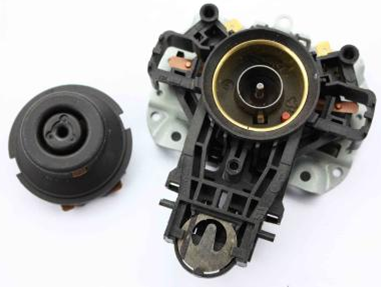
As you can see in the picture above, this is a temperature limiter for an electric kettle. As far as I know, temperature limiter are only used in electric kettles. There may be other household appliances that use a temperature limiter, but the appliance where the temperature limiter is used the most is the kettle. The definition of thermostat is similar to temperature limiter’s definition that is “normal operation”, in that they both specify that the part can only be operated during normal operation.

Similar Posts

  • Clause 3 – How to understand the definition of “protective extra-low voltage circuit”

    protective extra-low voltage circuit: earthed circuit operating at safety extra-low voltage which is separated from other circuits by basic insulation and protective screening, double insulation or reinforced insulationNOTE 1 Protective screening is the separation of circuits from live parts by means of an earthed screen.NOTE 2 A protective extra-low voltage circuit is also known as…

  • Clause 3 – How to understand the definition of “non-self-resetting thermal cut-out”

    non-self-resetting-thermal cut-out: thermal cut-out that requires a manual operation for resetting, or replacement of a part, in order to restore the current.NOTE Manual operation includes disconnection of the appliance from the supply mains. The thermal cut-out is equipped with a temperature-sensitive component, typically a bimetallic strip or a thermistor, which reacts to heat. As the…

  • Clause 3 – How to Understand the Definition of “Intentionally Weak Part”

    intentionally weak part: A part intended to rupture under abnormal operating conditions to prevent the occurrence of a condition that could impair compliance with this standard.NOTE: Such a part may be a replaceable component, such as a resistor or capacitor, or a part of a component to be replaced, such as an inaccessible thermal link

  • 第3項 「定格周波数」の定義の見方

    定格周波数: メーカーによってアプライアンスに割り当てられた周波数。 一般に、定格周波数は、製品設計時の対象市場国の標準実用周波数です。世界中で実用周波数は 50 Hz と 60 Hz の 2 つだけであるため、値は 50 Hz または 60 Hz、または 50 と 60 Hz の両方のみになります。 定格周波数、定格電流または定格電力入力、定格電圧などは、機器を特徴付ける基本パラメータであり、対象市場のニーズやユーティリティ条件から導き出されます。規格に従って試験を行う場合、これらのパラメータに従って試験条件を設定します。したがって、これらのパラメータはテスト前に確認する必要があります。確認しないと、作業の重複が生じ、誤ったテスト結果が生成されます。

  • 第3項 「遠隔操作」の定義の捉え方

    リモート操作: 電気通信、音響制御、バス システムなどの手段を使用して、機器から見えないところで開始できるコマンドによる機器の制御注記 赤外線コントロール自体は、遠隔操作に使用されるものとみなされません。ただし、通信、音響制御、バス システムなどのシステムの一部として組み込まれる場合があります。 一般的に使用されている赤外線リモコンは、赤外線リモコンの使用者が機器の作業現場にいて、赤外線リモコンを操作した後の機器の反応や動作状況をリアルタイムで確認できるため、遠隔操作ではありません。赤外線リモコンが通信システム、音声制御システム、またはバスシステムの一部である場合、この場合、制御の開始者は主に通信システム、音声制御システム、またはバスシステムを介して制御を完了する。一般的に、制御の開始者は、通信システム、音声制御システム、またはバス システムを介して別の赤外線コントローラに指示を送信し、その後、赤外線コントローラが赤外線リモコン情報を機器に送信して操作を完了します。この場合、この一連の制御システムは遠隔操作と見なすことができます。 例:一般的なエアコンに使用されている赤外線リモコンは遠隔操作ではありません。現在、建物の中核部分に設置できる集中型コントローラーが市販されています。ユーザーは、WIFI 経由で赤外線信号を送信するように制御できます。送信された赤外線信号は、室内のあらゆる電気製品を制御できます。これは遠隔操作です。 Commonly used infrared remote controls are not remote operation, because the user of the infrared remote controls is at the working site of the appliance, and can view the reaction and working status of the appliance after the infrared remote controls is operated in real time….

  • 第 3 項 – 「タイプ Y アタッチメント」の定義の理解方法

    タイプ Y アタッチメント: 製造元、そのサービス代理店、または同様の資格を持つ担当者が交換を行うための電源コードの取り付け方法。 次の 2 つの写真に示すように、アプライアンスの底部にあるカバーを取り外すと、コード クランプと内部電源コード コネクタが見えます。底部カバーの取り外しは比較的簡単ですが、電源コードが同様のニップルコネクタに接続されているか、機械的に固定されている場合は、電源コードを再接続するために専門の工具や破壊が必要となり、電源コードの交換が困難になります。この構造をタイプ Y アタッチメントとして定義する方が合理的です。 As shown in the following two pictures, after removing the cover at the bottom of the appliance, you can see the cord clamp and the internal supply cord connector. Removing the bottom cover is relatively easy, but if the power cord is connected with…