Clause 3 – How to understand the definition of “thermal cut-out”

thermal-cut-out: device which during abnormal operation limits the temperature of the controlled part by automatically opening the circuit, or by reducing the current, and is constructed so that its setting cannot be altered by the user.

There are three key provisions here. First, the thermal cut-out is a heat-sensing element, second, it can only be actuated during abnormal operation, and third, it cannot be adjusted by the user. Meanwhile the definition mentions that its function is to limit the temperature, and it does so by opening the circuit or reducing the current. Usually, we would think that its function is to prevent the temperature from being too high, indeed, most of its function is to prevent the temperature from being too high; however, in my opinion it can also be used to prevent the temperature from being too low, for example, in refrigerators or air-conditioning products. However, when we look at the definition of self-resetting thermal cut-out, the standard actually wants to limit just the high temperature state.
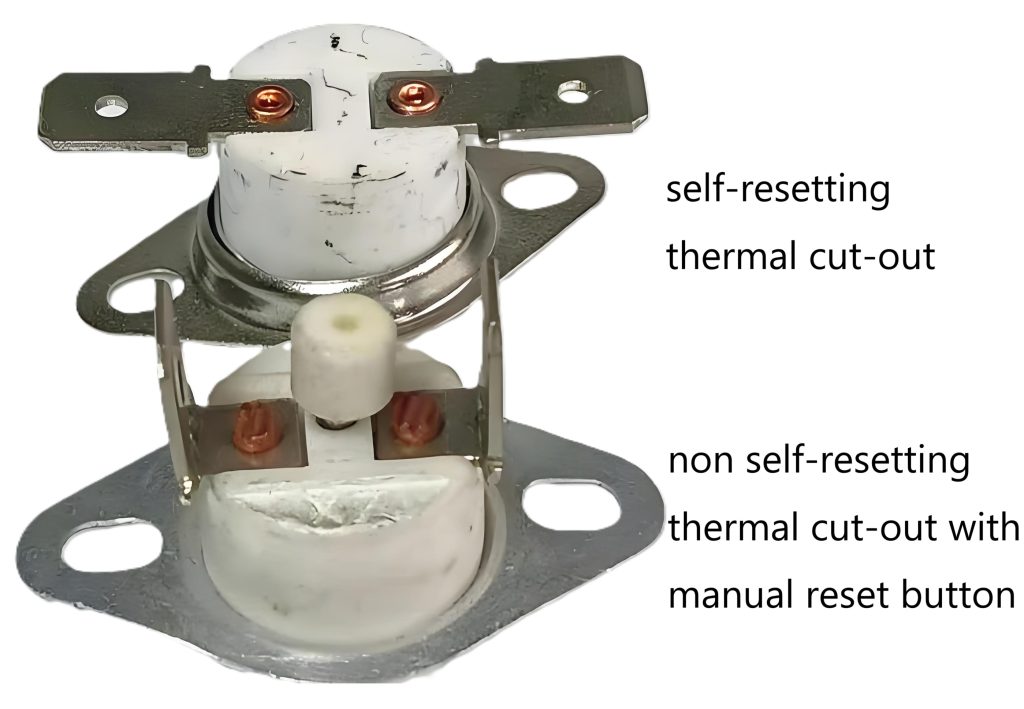
Thermal cut-out is a broad definition, which is subdivided into three categories of thermally sensitive protective devices, namely, self-resetting thermal cut-out, non-self-resetting thermal cut-out, and thermal link.
In normal operation, the component that operates may be a thermostat or temperature limiter, while in abnormal operation the component that operates is a thermal cut-out or a protective device.
Similar Posts

  • 第3項 「定格電圧範囲」の定義の見方

    定格電圧範囲:メーカーによって家電製品に割り当てられた電圧範囲。下限値と上限値で表されます。 この定義は、の定義を拡張したものです 定格電圧定格電圧 定格電圧、ただし、定格電圧が定義されていることはほとんどありません。 例えば、ヨーロッパの全EU加盟国市場を対象市場として設計された製品の場合、ほとんどのEU加盟国の商用電圧はAC 230Vですが、別途規定があればAC 240Vである国もあります定格電圧がAC230VまたはAC240Vの場合、本製品は国の定格電圧と異なる商用電圧では使用できません。このような状況を考慮し、AC220VとAC230V、AC240VをカバーするAC220~240Vの範囲で定格電圧を規定し、これら3つの商用電圧の国でも対応製品を使用できるようにしました。ここでは、AC220-240V または 220-240V~ がより一般的な形式です。 220 ~ 230V ~、380V ~ 415V ~、または 100 ~ 240V ~ (この状況のほとんどは、アダプターの定格入力電圧で電力供給されるアダプターの使用時に発生します) などもあります。製品の定格電圧は範囲が設定されているため、その電圧範囲における安全要件を規格に従って評価する必要があります。 For example, a product designed for the target market for the whole of Europe’s all EU member states market, most of the EU member states of the utility voltage is AC 230V,…

  • 第3項「機能絶縁」の定義の見方

    機能的絶縁: 電位の異なる導電性部分間の絶縁であり、機器が適切に機能するためにのみ必要です。 下の図は典型的な機能絶縁の図です。PCB の銅レール層の図に示されているように、ラベルの茶色の部分は電源活線 (電流ヒューズ間に接続されている 2 つの茶色の位置)、青色の部分です。接続は電力線の中性線であり、活線であり、中性線には 2 つの線の間に電圧差があるため、選択した銅線レールの青色の部分と選択した銅線レールの茶色の部分の間の最短距離になります。レール、つまり機能絶縁体です。実際、通常の動作では、下の写真の回路基板、銅レール上の電圧は多くの場所で同じではないため、機能絶縁の形成により、読者は動作電圧によって独自の回路分析を行うことができます。各部分。 AC 非同期モーターの一般的な巻線接続図は次の図のようになります。図のコンデンサが動作しているとき、コンデンサの両端の電圧は通常、製品の定格電圧よりも高くなります。たとえば、定格電圧が 220V の場合、動作中にマルチメータで測定されるコンデンサの両端の電圧は通常 300V を超えます。このとき、コンデンサの両端間の機能絶縁を評価する場合、300V以上の使用電圧を基準に評価する必要がありますが、実際にはコンデンサ自体の機能絶縁は一般的には可能ではありません。コンデンサの端子がコンデンサのケース内に封入されているため測定されます。測定できる箇所はコンデンサの2本のリード線の端子台です。 下図に示すように、端子台には左側に活線が接続され、右側に中性線が接続されています。赤い線の位置は機能絶縁体の沿面距離です(クリアランスもここで決定できます)。 下の図に示されているキャリパーの測定値は、PCB 上のアダプターの入力のライブ銅線と中性銅線の間の機能絶縁を表しています。 As shown in the figure below, the terminal block has the live wire connected on the left and the neutral wire connected on the right. The position of the red line is the creepage distance of the…

  • Clause 3 – How to understand the definition of “protective electronic circuit”

    protective electronic circuit: electronic circuit that prevents a hazardous situation under abnormal operating conditions.NOTE Parts of the circuit may also be used for functional purposes. With the advancement of technology, more and more electronic circuits are being used in household electrical products, and these electronic circuits are usually integrated on PCBs. They use microprocessor chips…

  • Clause 3 – How to Understand the Definition of “off position”

    off position: stable position of a switching device in which the circuit controlled by the switch is disconnected from its supply or, for electronic disconnection, the circuit is de-energized.NOTE The off position does not imply an all-pole disconnection. With reference to the content in the NOTE, both all-pole disconnection and single-pole disconnection are a stable…

  • 第3項 「遠隔操作」の定義の捉え方

    リモート操作: 電気通信、音響制御、バス システムなどの手段を使用して、機器から見えないところで開始できるコマンドによる機器の制御注記 赤外線コントロール自体は、遠隔操作に使用されるものとみなされません。ただし、通信、音響制御、バス システムなどのシステムの一部として組み込まれる場合があります。 一般的に使用されている赤外線リモコンは、赤外線リモコンの使用者が機器の作業現場にいて、赤外線リモコンを操作した後の機器の反応や動作状況をリアルタイムで確認できるため、遠隔操作ではありません。赤外線リモコンが通信システム、音声制御システム、またはバスシステムの一部である場合、この場合、制御の開始者は主に通信システム、音声制御システム、またはバスシステムを介して制御を完了する。一般的に、制御の開始者は、通信システム、音声制御システム、またはバス システムを介して別の赤外線コントローラに指示を送信し、その後、赤外線コントローラが赤外線リモコン情報を機器に送信して操作を完了します。この場合、この一連の制御システムは遠隔操作と見なすことができます。 例:一般的なエアコンに使用されている赤外線リモコンは遠隔操作ではありません。現在、建物の中核部分に設置できる集中型コントローラーが市販されています。ユーザーは、WIFI 経由で赤外線信号を送信するように制御できます。送信された赤外線信号は、室内のあらゆる電気製品を制御できます。これは遠隔操作です。 Commonly used infrared remote controls are not remote operation, because the user of the infrared remote controls is at the working site of the appliance, and can view the reaction and working status of the appliance after the infrared remote controls is operated in real time….

  • Clause 3 – How to understand the definition of “stationary appliance”

    stationary appliance: fixed appliance or an appliance which is not a portable appliance. Stationary appliance includes fixed appliance and not a portable appliance. The characteristic of a stationary appliance is that once it is put into use, it will be placed in a fixed position. At the same time, the position of the appliances will…