Clause 3 – How to understand the definition of “thermal cut-out”

thermal-cut-out: device which during abnormal operation limits the temperature of the controlled part by automatically opening the circuit, or by reducing the current, and is constructed so that its setting cannot be altered by the user.

There are three key provisions here. First, the thermal cut-out is a heat-sensing element, second, it can only be actuated during abnormal operation, and third, it cannot be adjusted by the user. Meanwhile the definition mentions that its function is to limit the temperature, and it does so by opening the circuit or reducing the current. Usually, we would think that its function is to prevent the temperature from being too high, indeed, most of its function is to prevent the temperature from being too high; however, in my opinion it can also be used to prevent the temperature from being too low, for example, in refrigerators or air-conditioning products. However, when we look at the definition of self-resetting thermal cut-out, the standard actually wants to limit just the high temperature state.
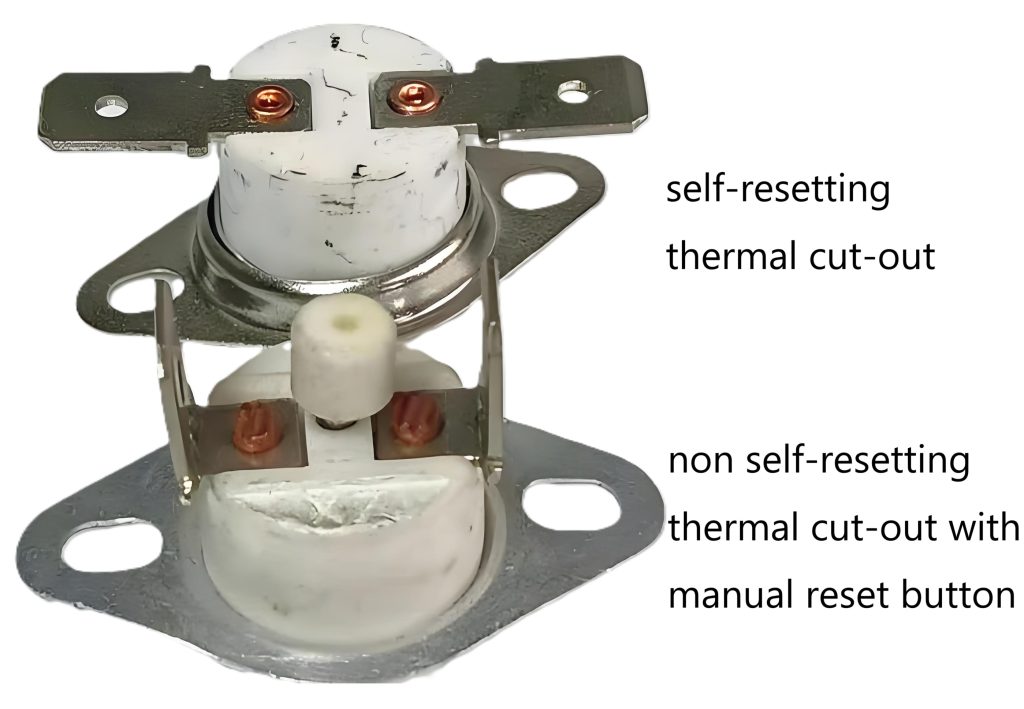
Thermal cut-out is a broad definition, which is subdivided into three categories of thermally sensitive protective devices, namely, self-resetting thermal cut-out, non-self-resetting thermal cut-out, and thermal link.
In normal operation, the component that operates may be a thermostat or temperature limiter, while in abnormal operation the component that operates is a thermal cut-out or a protective device.
Similar Posts

  • Clause 3 – How to understand the definition of “non-detachable part”

    non-detachable-part: part that can only be removed or opened with the aid of a tool or a part that fulfils the test of 22.11. The definition of this concept is mainly for the judgment of clause 8 and clause 20, and the judgment of other clauses may also be used. On the appliance, whether any…

  • 第 3 項 – 「タイプ Y アタッチメント」の定義の理解方法

    タイプ Y アタッチメント: 製造元、そのサービス代理店、または同様の資格を持つ担当者が交換を行うための電源コードの取り付け方法。 次の 2 つの写真に示すように、アプライアンスの底部にあるカバーを取り外すと、コード クランプと内部電源コード コネクタが見えます。底部カバーの取り外しは比較的簡単ですが、電源コードが同様のニップルコネクタに接続されているか、機械的に固定されている場合は、電源コードを再接続するために専門の工具や破壊が必要となり、電源コードの交換が困難になります。この構造をタイプ Y アタッチメントとして定義する方が合理的です。 As shown in the following two pictures, after removing the cover at the bottom of the appliance, you can see the cord clamp and the internal supply cord connector. Removing the bottom cover is relatively easy, but if the power cord is connected with…

  • 第3項「補助絶縁」の定義の見方

    補助絶縁:基礎絶縁が切れた場合に感電を防ぐために、基礎絶縁とは別に施される独立した絶縁 基礎断熱材の外側にあり、基礎断熱材から独立しており、通常はユーザーがアクセスできる断熱材。補助絶縁はその名のとおり追加的なものであり、基礎絶縁に追加する絶縁を指します。これには、この規格の基本原則、つまり二重保護の原則が関係します。いかなる危険に対しても、少なくとも 2 層または 2 セットの保護措置を講じる必要があります。いずれかの保護手段が失敗した場合でも、アプライアンスは別の保護層によって保護されます。ここでの追加絶縁の要件は、基礎絶縁が機能しなくなった場合に保護の役割を果たすことができる絶縁を考慮することです。ここでの保護は充電部の保護のみを目的としています。この規格の他の要件には、非充電部分に対する二重保護措置の要件が含まれます。 下図に示すように、基礎絶縁体の外表面(ここでは内部電線の電線被覆の外表面、またはスイッチのプラスチック材料表面と理解してください)から絶縁可能な箇所まで使用者が触れる部分(機器の底カバーや側面シェル)は、写真例から、機器の底カバーや側面シェルが補助絶縁材であると判断できます。これに対応して、サイドシェル内面に沿った内部リード線シースから外部ユーザーが触れる可能性のある場所までの沿面距離を補助絶縁とし、内部基礎絶縁からの最短直線距離と定義できます。空気を通って外部ユーザーが触れる可能性のある場所までの距離を補助絶縁クリアランスとして定義できます。ここでいうクリアランスとは、一般的にボトムシェルとサイドシェルの間の隙間を指します。

  • 第3項「定格インパルス電圧」の定義の見方

    定格インパルス電圧: 機器の定格電圧と過電圧カテゴリから導出される電圧。過渡過電圧に対する絶縁の指定された耐力を特徴づけます。 初心者にとって、この定義の物理的な意味を理解する必要はありません。規格におけるこの電圧値の主な用途は、クリアランスの制限値を決定することです。表 15 を参照すると、定格インパルス電圧値を直接決定できます。過電圧カテゴリ(OVC)は標準IEC 60664-1から来ていると言わざるを得ません。以下の表に定義を示します。 一方、過電圧カテゴリ(OVC)については説明図があります。 On the other hand, there is a drawing to explain overvoltage category(OVC).

  • Clause 3 – How to understand the definition of “battery-operated appliance”

    (IEC 60335-1 Ed. 5.1) battery-operated appliance: appliance deriving its energy from batteries enabling the appliance to perform its intended function without a mains connection.(IEC 60335-1 Ed. 6)battery-operated appliance: appliance deriving its energy from batteries enabling the appliance to perform its intended function without a supply connectionNote 1 to entry: A battery-operated appliance can have a…

  • 第 3 項 – 「動作電圧」の定義の理解方法

    就労電圧: 機器が定格電圧で供給され、通常の動作で動作し、値が最大になるように制御装置やスイッチング デバイスが配置されている場合に、対象の部品が受ける最大電圧 注 1 動作電圧は共振電圧を考慮しています。 注 2 動作電圧を推定する際、過渡電圧の影響は無視されます。 ザ 定格電圧 は通常、テスト対象のサンプルの電源電圧ですが、通常の動作状態にある機器の内部回路では、電圧がこの電圧より高いか低い回路が存在します 定格電圧。 AC非同期モーターで一般的に使用される一般的なファンは、コンデンサを始動する必要があり、両側の始動コンデンサ電圧は一般に 定格電圧定格電圧 電圧の;明らかに、家電製品には複数の動作電圧が存在する可能性があります。規格によれば、回路のこの部分(定義では「検討中の部品」)が動作電圧に基づいて規格の安全要件を満たしているかどうかを評価し、判断する必要がある場合があります。この場合、規格で定義されている動作回路で発生する可能性のある最大電圧を考慮する必要があります。定義によれば、動作電圧の最大値を得るには、製品に以下のものが供給される必要があります 定格電圧 および通常の動作条件で動作します (製品に定格電圧範囲のラベルが付いている場合、通常は 220 ~ 240V の定格電圧など、電圧を供給するための定格電圧範囲の上限として使用されます)。 240V 電源)を使用し、同時に製品内部のコントローラとスイッチングデバイスが定格電圧の電力を供給し、通常の使用条件で動作するように設定する必要があります。電源を供給し、通常の動作条件で動作します。目的は、最高の動作電圧が確実に得られるようにすることであり、評価は製品が最も過酷な動作条件にあることに基づいて行われます。なお、ここではピークテストについて特に言及していないため、動作電圧は実効値となります。 第 29 条の沿面距離の決定は、動作電圧に基づいて沿面距離の制限を決定するため、製品の特定の場所での動作電圧が必要になります。第 13 条の電気強度試験では、絶縁構造に適用される試験電圧も動作電圧に基づいています。 The determination of creepage distances in clause 29 is based on the working voltage to determine the creepage distance limit, which then requires the working…