Clause 3 – How to understand the definition of “small part”

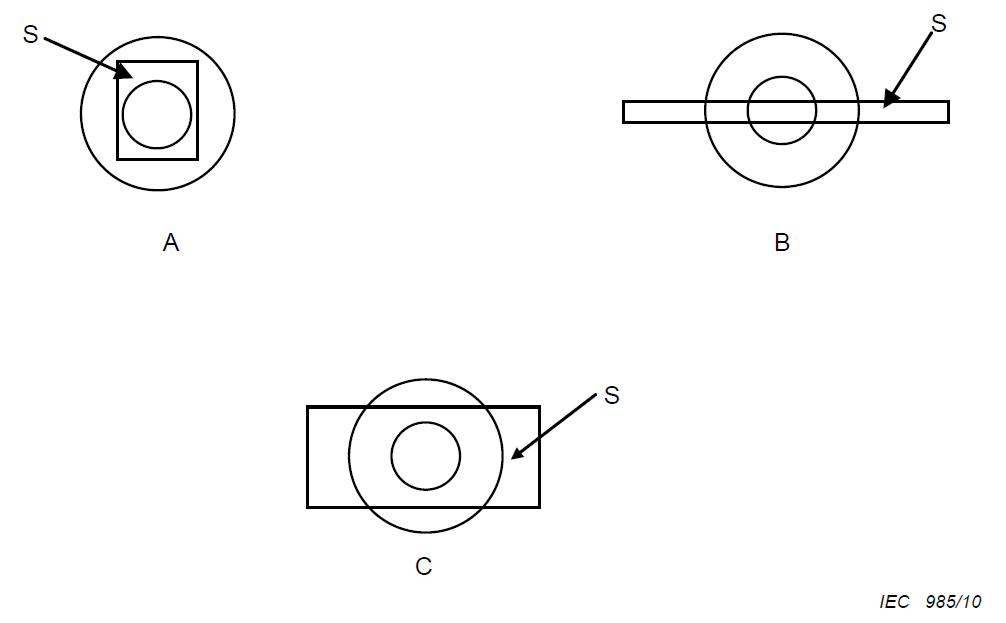
small part: part, where each surface lies completely within a circle of 15 mm diameter, or a part where some of the surface lies outside a 15 mm diameter circle but in such a way that it is not possible to fit a circle of 8 mm diameter on any of the surfaces.
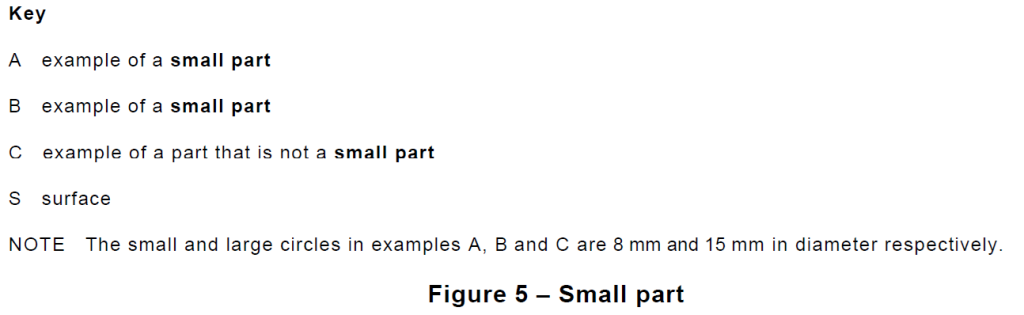
NOTE A part that is too small to grip and at the same time to be able to apply the glow-wire tip is shown in example A in Figure 5. A part that is large enough to grip but that is too small to be able to apply the glow-wire tip is shown in example B in Figure 5. A part that is not a small part is shown in example C in Figure 5.

The difference between small part and not a small part has been very well illustrated in Figure 5. Special attention should be paid here to the fact that every surface of the object needs to be considered when determining.
In the case of hollow structural members, or semi-hollow structural members, it is necessary to lay the parts out flat to make a determination.

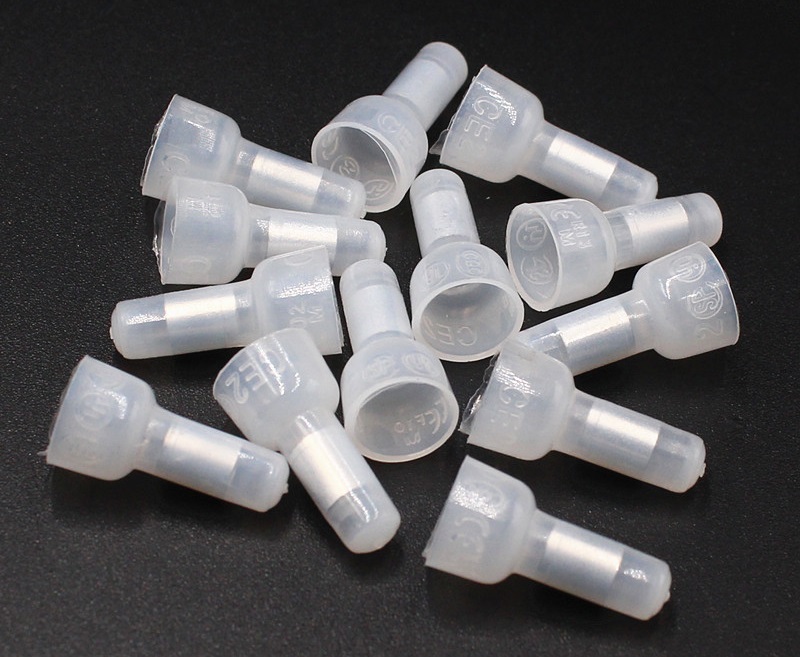
A teat connector with a semi-hollow structure, as shown in the picture, is not a small part.
Similar Posts

  • How are the creepage distances and electrical clearances of PTC heating element surfaces determined?

    We are discussing here the second structure of the PTC heating element, PTC heating element structure please refer to the explanation of its definition. How is the creepage distance of the functional insulation at the location of the red circle in Figure 1 determined? We all know that NOTE 1 of TABLE 18 section has…

  • Clause 3 – How to understand the definition of “electronic component”

    electronic component: part in which conduction is achieved principally by electrons moving through a vacuum, gas or semiconductor.NOTE Neon indicators are not considered to be electronic components. Early vacuum tubes were components that allowed electrons to conduct in a vacuum and were the core components of old radios and televisions.Electrons move through specific gases, colliding…

  • Clause 3 – How to understand the definition of “motor-operated appliance”

    motor-operated appliance: appliance incorporating motors but without any heating elementNote 1 to entry: Magnetically driven appliances are considered to be motor-operated appliances. Household electrical appliances usually use heating elements or motors to complete their designed functions. The main functions are heating, such as heating food or air, and rotation or mechanical movement of products, such…

  • ข้อ 3 – จะเข้าใจคำจำกัดความของ “ฉนวนเสริม” ได้อย่างไร

    ดังแสดงในรูปด้านล่าง จากพื้นผิวด้านนอกของฉนวนพื้นฐาน (ในที่นี้สามารถเข้าใจได้ว่าเป็นพื้นผิวด้านนอกของปลอกลวดของลวดภายใน หรือพื้นผิววัสดุพลาสติกของสวิตช์) ไปยังตำแหน่งที่สามารถทำได้ จากภาพตัวอย่างที่ผู้ใช้สัมผัส (ฝาครอบด้านล่างหรือด้านข้างของเครื่องใช้ไฟฟ้า) สามารถพิจารณาว่าฝาครอบด้านล่างและด้านข้างของเครื่องใช้ไฟฟ้าเป็นฉนวนเสริมได้ ในทำนองเดียวกัน ระยะห่างตามผิวฉนวนจากปลอกลวดตะกั่วภายในตามพื้นผิวด้านในของเปลือกด้านข้างไปยังตำแหน่งที่ผู้ใช้ภายนอกสัมผัสได้สามารถกำหนดเป็นฉนวนเสริมได้ จากนั้นเป็นระยะทางเส้นตรงที่สั้นที่สุดจากฉนวนพื้นฐานภายใน ผ่านอากาศไปยังสถานที่ที่ผู้ใช้ภายนอกสามารถสัมผัสได้สามารถกำหนดเป็นระยะห่างของฉนวนเสริมได้ ระยะห่างโดยทั่วไปหมายถึงช่องว่างระหว่างเปลือกด้านล่างและเปลือกด้านข้าง An insulation that is outside the basic insulation and is independent of the basic insulation, and is usually accessible to the user. supplementary insulation, as the name implies, is additional, and refers to insulation added to the basic insulation. This involves a…

  • ข้อ 3 – วิธีทำความเข้าใจคำจำกัดความของ “หม้อแปลงแยกความปลอดภัย”

    หม้อแปลงที่กล่าวถึงในที่นี้ใช้เพื่อจ่ายไฟให้กับเครื่องใช้ไฟฟ้าหรือวงจร หม้อแปลงทั่วไปส่วนใหญ่จะจ่ายไฟให้กับวงจร และจ่ายไฟให้กับเครื่องใช้ไฟฟ้าบางส่วน สิ่งสำคัญที่นี่คือการวัดการแยกระหว่างขดลวดอินพุตและขดลวดเอาต์พุต ซึ่งต้องเป็นฉนวนสองชั้นหรือฉนวนเสริมแรง หรือฉนวนชนิดเทียบเท่า ข้อกำหนดนี้คือเพื่อให้แน่ใจว่าขดลวดปฐมภูมิและขดลวดทุติยภูมิมีฉนวนเพียงพอ หากฉนวนเพียงพอ การแยกระหว่างขดลวดปฐมภูมิและขดลวดทุติยภูมิของหม้อแปลงไฟฟ้าจะค่อนข้างปลอดภัย ข้อควรระวังในการป้องกันสองชั้น หม้อแปลงไฟฟ้าที่ใช้กันมากที่สุดสองตัวในเครื่องใช้ในครัวเรือนแสดงในรูปด้านล่าง หม้อแปลงชนิดแรกที่ใช้ในบอร์ด PCBboard ของสวิตช์ไฟ หม้อแปลงชนิดนี้จะวางขดลวดปฐมภูมิและขดลวดทุติยภูมิทับบนแกนแม่เหล็กเดียวกัน ดังนั้น เพื่อให้แน่ใจว่าระยะห่างตามผิวฉนวนและระยะห่างทางไฟฟ้าระหว่างปฐมภูมิและทุติยภูมิ จึงไม่สามารถวางขดลวดที่พันไว้บนใบหน้าส่วนบนและส่วนล่างได้ ขดลวดจะต้องอยู่ห่างจากผิวหน้าด้านบนและด้านล่าง ดังแสดงในรูปด้านล่าง: เพื่อช่วยให้ผู้อ่านเข้าใจโครงสร้างของหม้อแปลงนี้ได้ดีขึ้น ผมจึงได้นำรูปถ่ายภายนอกและภายในของหม้อแปลงทั้งหมดมาไว้ในหน้านี้เพื่อใช้อ้างอิงสำหรับผู้อ่าน มุมมองโดยรวมสำหรับหม้อแปลงฉนวนนิรภัย The other is a drawer-type linear transformer, as shown below:

  • A question regarding to how to use the small parts cylinder of Figure 13 in standard IEC 60335-1?

    There is a requirement in clause 22.12 – the last paragraph as below: If the part is removed and can be contained within the small parts cylinder in Figure 13, its loosening is considered to result in a choking hazard. Actual photos are as follows: The standard is concerned that if parts are too small,…