Clause 3 – How to understand the definition of “thermal cut-out”

thermal-cut-out: device which during abnormal operation limits the temperature of the controlled part by automatically opening the circuit, or by reducing the current, and is constructed so that its setting cannot be altered by the user.

There are three key provisions here. First, the thermal cut-out is a heat-sensing element, second, it can only be actuated during abnormal operation, and third, it cannot be adjusted by the user. Meanwhile the definition mentions that its function is to limit the temperature, and it does so by opening the circuit or reducing the current. Usually, we would think that its function is to prevent the temperature from being too high, indeed, most of its function is to prevent the temperature from being too high; however, in my opinion it can also be used to prevent the temperature from being too low, for example, in refrigerators or air-conditioning products. However, when we look at the definition of self-resetting thermal cut-out, the standard actually wants to limit just the high temperature state.
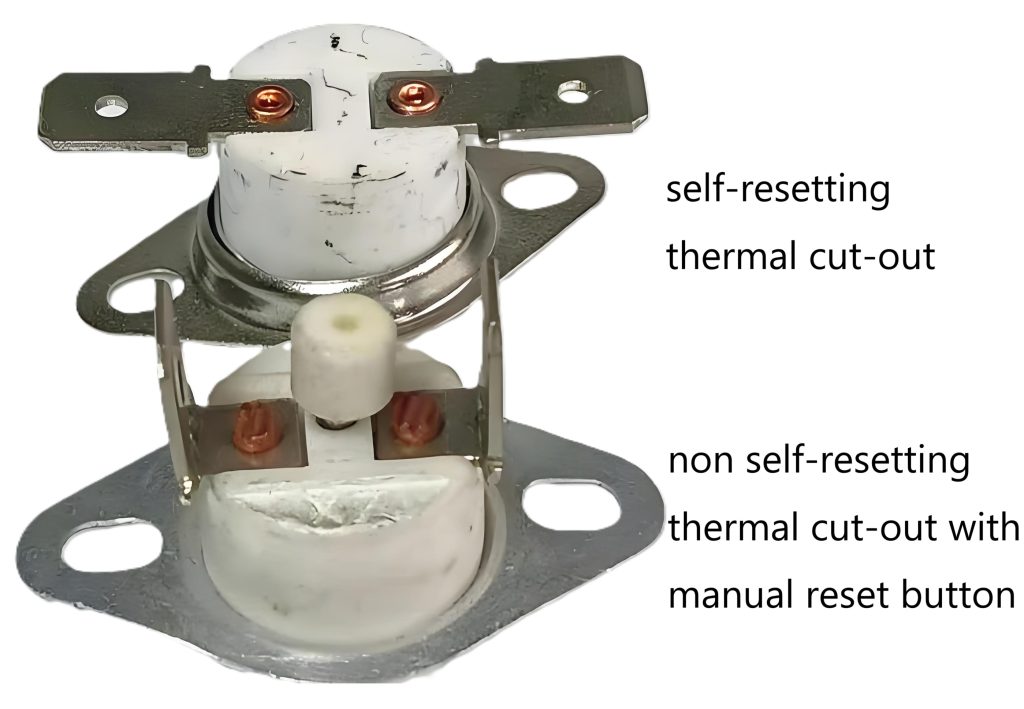
Thermal cut-out is a broad definition, which is subdivided into three categories of thermally sensitive protective devices, namely, self-resetting thermal cut-out, non-self-resetting thermal cut-out, and thermal link.
In normal operation, the component that operates may be a thermostat or temperature limiter, while in abnormal operation the component that operates is a thermal cut-out or a protective device.
Similar Posts

  • Clause 3 – How to understand the definition of “self-resetting thermal cut-out”

    self-resetting thermal cut-out: thermal cut-out that automatically restores the current after the relevant part of the appliance has cooled down sufficiently In the definition there is a clear mention, when the temperature is cooled to a certain degree, in fact, its intention is to control the temperature is not too high, when the temperature is…

  • ข้อ 3 – วิธีทำความเข้าใจคำจำกัดความของ “ช่วงความถี่ที่กำหนด”

    ความถี่ที่กำหนดในรูปแบบของช่วง โดยทั่วไปคือ 50-60 Hz แต่ทุกประเทศในโลกมีความถี่หลัก 50 Hz หรือ 60 Hz จึงไม่มีค่าความถี่กลาง ดังนั้น คำจำกัดความจึงไม่มีความหมายมากนัก อย่างไรก็ตาม ยังมีผู้ซื้อหรือผู้ผลิตที่ให้ช่วงความถี่ในรูปแบบ 50-60Hz ในความคิดของฉัน แม้จะพิจารณาความผันผวนของความถี่ที่เกิดจากแรงดันไฟฟ้าของอาคารที่ไม่เสถียร 50-60Hz ก็ไม่ได้คำนึงถึงสถานการณ์ที่น้อยกว่า 50Hz หรือมากกว่า 60Hz ดังนั้น ฉันขอแนะนำให้ทำเครื่องหมายความถี่ที่กำหนดเป็น 50/60Hz โดยตรงTherefore, I recommend marking the rated frequency as 50/60Hz directly.

  • ข้อ 3 – จะเข้าใจคำจำกัดความของ “การกวาดล้าง” ได้อย่างไร

    พื้นผิวที่เข้าถึงได้การกวาดล้างเป็นแนวคิดที่สำคัญมาก เพื่อให้เข้าใจถึงการกวาดล้าง เราต้องพูดอีกครั้งว่าไม่มีสารใดเป็นฉนวนโดยสมบูรณ์ และอากาศก็สามารถนำไฟฟ้าได้เช่นกัน เมื่อแรงดันไฟฟ้าสูงมาก กระแสไฟฟ้าจะถูกนำผ่านอากาศ ฟ้าผ่าระหว่างเกิดพายุฝนฟ้าคะนองเป็นตัวอย่างทั่วไปของฟ้าผ่าที่ผ่านอากาศ แรงดันไฟฟ้าของฟ้าผ่าสูงมาก จึงสามารถทะลุผ่านอากาศส่วนที่ยาวมากได้ ทำให้อากาศส่วนนี้เป็นสื่อกระแสไฟฟ้า ในเครื่องใช้ไฟฟ้าในครัวเรือนถึงแม้แรงดันไฟฟ้าจะต่ำมาก แต่ก็มีอากาศอยู่ในผลิตภัณฑ์เป็นจำนวนมาก และกระแสไฟจะถูกนำผ่านอากาศด้วย เมื่อแรงดันไฟฟ้าเพิ่มขึ้น ระยะทางที่แรงดันไฟฟ้าอาจทะลุผ่านอากาศก็จะนานขึ้นเช่นกัน สิ่งนี้ทำให้เกิดแนวคิดเรื่องการกวาดล้าง สำหรับคำอธิบายโดยละเอียดเกี่ยวกับการกวาดล้าง โปรดดู IEC 60664-1 (การประสานงานของฉนวนสำหรับอุปกรณ์ภายในระบบไฟฟ้าแรงต่ำ – ส่วนที่ 1: หลักการ ข้อกำหนด และการทดสอบ)ฉันคิดว่ารูปภาพต่อไปนี้สามารถอธิบายเส้นทางการกวาดล้างทางไฟฟ้าได้ดี ช่องว่างอาจเกิดขึ้นระหว่างอิเล็กโทรดสองตัวที่มีแรงดันไฟฟ้าต่างกัน หรือระหว่างชิ้นส่วนที่มีไฟฟ้ากับมือของผู้ใช้ผลิตภัณฑ์ไฟฟ้า คุณเพียงแค่ต้องจินตนาการว่าอิเล็กโทรดทั้งสองในภาพด้านบนเป็นวัตถุอื่น เมื่อเราอธิบายฉนวนพื้นฐานและฉนวนตามการใช้งาน เราได้ให้ภาพถ่ายจริงบางส่วนเพื่ออธิบายตัวอย่างการกวาดล้างและการเคลื่อนตัว รูปที่ 11 – ตัวอย่างระยะห่างในมาตรฐาน IEC 60335-1 เป็นตัวอย่างง่ายๆ จากตัวเลขนี้ เราสามารถคิดถึงคุณลักษณะพื้นฐานของอุปกรณ์คลาส II โครงสร้างคลาส II อุปกรณ์คลาส I และการสร้างคลาส I คีย์ 1 ชิ้นส่วนโลหะที่ขุดขึ้นมาและเข้าถึงได้2 กล่องหุ้ม3 ชิ้นส่วนโลหะที่ต่อลงดินที่เข้าถึงได้4 ชิ้นส่วนโลหะที่ขุดขึ้นมาซึ่งเข้าถึงไม่ได้ส่วนที่มีไฟฟ้า L1…

  • Clause 3 – How to understand the definition of “thermal link”

    thermal link: thermal cut-out which operates only once and requires partial or complete replacement It is a temperature sensing device, but it can only be operated once, when the temperature is higher than its set value, it will disconnect, and after disconnection, the current can not pass through, so as to play the role of…

  • Clause 3 – How to Understand the Definition of “off position”

    off position: stable position of a switching device in which the circuit controlled by the switch is disconnected from its supply or, for electronic disconnection, the circuit is de-energized.NOTE The off position does not imply an all-pole disconnection. With reference to the content in the NOTE, both all-pole disconnection and single-pole disconnection are a stable…

  • ข้อ 3 – จะเข้าใจคำจำกัดความของ “ฉนวนเสริม” ได้อย่างไร

    ดังแสดงในรูปด้านล่าง จากพื้นผิวด้านนอกของฉนวนพื้นฐาน (ในที่นี้สามารถเข้าใจได้ว่าเป็นพื้นผิวด้านนอกของปลอกลวดของลวดภายใน หรือพื้นผิววัสดุพลาสติกของสวิตช์) ไปยังตำแหน่งที่สามารถทำได้ จากภาพตัวอย่างที่ผู้ใช้สัมผัส (ฝาครอบด้านล่างหรือด้านข้างของเครื่องใช้ไฟฟ้า) สามารถพิจารณาว่าฝาครอบด้านล่างและด้านข้างของเครื่องใช้ไฟฟ้าเป็นฉนวนเสริมได้ ในทำนองเดียวกัน ระยะห่างตามผิวฉนวนจากปลอกลวดตะกั่วภายในตามพื้นผิวด้านในของเปลือกด้านข้างไปยังตำแหน่งที่ผู้ใช้ภายนอกสัมผัสได้สามารถกำหนดเป็นฉนวนเสริมได้ จากนั้นเป็นระยะทางเส้นตรงที่สั้นที่สุดจากฉนวนพื้นฐานภายใน ผ่านอากาศไปยังสถานที่ที่ผู้ใช้ภายนอกสามารถสัมผัสได้สามารถกำหนดเป็นระยะห่างของฉนวนเสริมได้ ระยะห่างโดยทั่วไปหมายถึงช่องว่างระหว่างเปลือกด้านล่างและเปลือกด้านข้าง An insulation that is outside the basic insulation and is independent of the basic insulation, and is usually accessible to the user. supplementary insulation, as the name implies, is additional, and refers to insulation added to the basic insulation. This involves a…