Clause 3 – How to Understand the Definition of “off position”

off position: stable position of a switching device in which the circuit controlled by the switch is disconnected from its supply or, for electronic disconnection, the circuit is de-energized.
NOTE The off position does not imply an all-pole disconnection.

With reference to the content in the NOTE, both all-pole disconnection and single-pole disconnection are a stable condition of off position. So, what kind of electronic disconnection could be considered off position?
electronic disconnection, it could be achieved that the circuit is de-energized by relay, the circuit can also be disconnected by utilizing the switching function of a transistor, many other components capable of disconnecting circuits in a similar manner exist, though they will not be discussed here.

What we need to clarify is the difference between electronic disconnection and stand-by mode.

I checked standard IEC 335-1:1993 ED3.0, it gave us definitions below:
Off position: stable position of a switching device in which the circuit controlled by the switch is disconnected from its supply.
In the earlier version IEC 335-1:1976 ED2.0, the definition of “off position” was not yet established.

I searched the entire IEC 60335-1:2010+A1:2013+A2:2016 standard and found seven references to the “off position” within the document, like clause 7.10, clause 13.2, clause 16.2, clause 19.11, clause 19.13, clause 22.5, clause 22.55.
Particularly from the descriptions in clause 7.10 and clause 19.11, we can reasonably infer that electronic disconnection and stand-by mode should be considered as the off position. There is a word “circuit” in definition, it can be understood as the power supply circuit for the main energy-consuming components in the appliance, which excludes the electronic control circuits used for the PCB. As shown in the figure below, the content not highlighted by the red box corresponds to the “circuit” mentioned in the standard.
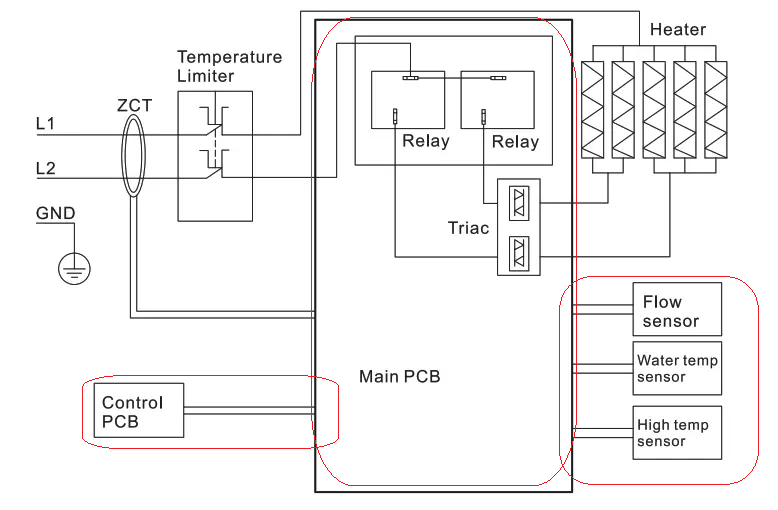
off position circuit diagram

Similar Posts

  • ข้อ 3 – วิธีทำความเข้าใจคำจำกัดความของ “ฉนวนพื้นฐาน”

    ตามที่แสดงในภาพซ้ายด้านล่าง เป็นภาพถ่ายฝาครอบด้านล่างของพัดลม และภาพขวาเป็นภาพถ่ายที่ไม่มีฝาครอบด้านล่าง ผิวลวดสีน้ำเงินและสีน้ำตาลภายในสายไฟในภาพด้านขวาถือได้ว่าเป็นฉนวนพื้นฐาน ในเวลาเดียวกัน สกินลวดสีขาว สีแดง และสีดำบนสวิตช์ที่เชื่อมต่อกับเปลือกสีดำสามารถถือเป็นฉนวนพื้นฐานได้ ส่วนที่มีกระแสไฟฟ้าที่นี่คือแกนทองแดงในเส้นลวด นอกจากนี้ ระยะห่างระหว่างตัวนำโลหะในสวิตช์และพื้นผิวด้านในของเปลือกสีขาวสามารถตัดสินได้ว่าเป็นฉนวนพื้นฐาน จากมุมมองของระยะตามผิวฉนวน กระแสไฟฟ้าในตัวนำภายในสวิตช์จะดำเนินการ (ไต่ขึ้น) ไปตามพื้นผิวฉนวนของสวิตช์ไปยังพื้นผิวด้านในของเปลือกสีขาว (มุมเล็กซ้ายของภาพขวา) และระยะนี้สามารถ ถือเป็นระยะห่างตามผิวฉนวนของฉนวนพื้นฐาน จากมุมมองของระยะห่างทางไฟฟ้า กระแสไฟฟ้าในตัวนำภายในสวิตช์จะถูกส่งโดยตรงผ่านอากาศระหว่างพื้นผิวด้านในของฝาครอบด้านล่างของพัดลมและเปลือกสวิตช์ และระยะห่างระหว่างอากาศนี้ถือเป็นระยะห่างของฉนวนพื้นฐาน (เปลือกพลาสติกสีขาวถือเป็นฉนวนเพิ่มเติม) ดังแสดงในรูปด้านล่าง ตัวนำเคลือบแล็คเกอร์ของขดลวดของมอเตอร์ได้รับการแก้ไขโดยกระดาษช่องสีขาวที่สอดเข้าไปในสเตเตอร์ของมอเตอร์ ขดลวดถูกระบุว่าเป็นชิ้นส่วนที่มีไฟฟ้าแบบเปิดโล่งตามมาตรฐาน ตัวนำเคลือบแล็คเกอร์ของขดลวดและสเตเตอร์ของมอเตอร์จะสร้างวงวนนำไฟฟ้าผ่านกระดาษช่อง (โดยทั่วไป หากเป็นเครื่องใช้ไฟฟ้าประเภท 1 สเตเตอร์ที่เชื่อมต่อกับตัวเรือนมอเตอร์จะถูกต่อสายดินด้วยเนื่องจากตัวเรือนมอเตอร์ต่อสายดิน ถ้าเป็นเช่นนั้น อุปกรณ์ประเภท II ตัวเรือนมอเตอร์ และสเตเตอร์ของมอเตอร์เป็นส่วนประกอบโลหะขั้นกลางที่ไม่มีการต่อสายดิน) แม้ว่าค่าการนำไฟฟ้าของกระดาษสล็อตจะไม่เพียงพอ แต่กระแสไฟอ่อนจะยังคงเกิดขึ้นบนกระดาษสล็อต ปริมาณกระแสไฟฟ้าที่สร้างขึ้นที่นี่เกี่ยวข้องโดยตรงกับประสิทธิภาพของกระดาษสล็อต วัสดุกระดาษช่องนี้สามารถกำหนดได้ว่าเป็นฉนวนพื้นฐาน พื้นผิวของกระดาษช่องสามารถเชื่อมต่อกับการเคลือบโลหะของขดลวด ดังนั้นระยะทางบนพื้นผิวกระดาษของช่องสามารถกำหนดเป็นระยะทางตามผิวฉนวนของฉนวนพื้นฐาน วัสดุของกระดาษสล็อตนั้นมีบทบาทเป็นฉนวนแข็ง (แม้ว่าจะไม่มีข้อกำหนดความหนาสำหรับฉนวนแข็ง แต่ก็ยังต้องเป็นไปตามข้อกำหนดกระแสไฟรั่วและความแข็งแรงทางไฟฟ้าของบทที่ 13 และ 16) ดังนั้น ระยะห่างทางไฟฟ้าในรูปด้านบนคือระยะห่างที่สั้นที่สุดระหว่างขดลวดและการเคลือบสเตเตอร์ในอากาศ ดังแสดงในรูปด้านล่าง และ nbsp; ลวดพันของมอเตอร์ไม่ได้รับการแก้ไขอย่างถูกต้องและอยู่ใกล้กับสเตเตอร์ของมอเตอร์มาก มันไม่สามารถตอบสนองข้อกำหนดระยะตามผิวฉนวนและระยะกวาดล้างของข้อ 29…

  • ข้อ 3 – วิธีทำความเข้าใจคำจำกัดความของ “สายไฟ”

    ภาพด้านล่างแสดงชุดสายไฟ ไม่ใช่สายไฟ ภาพด้านล่างแสดงสายไฟพร้อมปลั๊ก Below photo shows a cord set, not a supply cord. Below photo shows a supply cord equip with a plug

  • Clause 3 – How to understand the definition of “thermostat”

    thermostat: temperature-sensing device, the operating temperature of which may be either fixed or adjustable and which during normal operation keeps the temperature of the controlled part between certain limits by automatically opening and closing a circuit. The thermostat itself does not control the temperature, the thermostat senses the temperature and controls the temperature by switching…

  • Clause 3 – How to understand the definition of “user maintenance”

    user maintenance: any maintenance operation stated in the instructions for use, or marked on the appliance, that the user is intended to perform. Allowed user-executed operations, the operation guideline was given in user manual, and it could be showed in enclosure of appliance. Since it is a allowed user-executed operation, then additional protective method should…

  • ข้อ 3 – วิธีทำความเข้าใจคำจำกัดความของ “ไฟล์แนบประเภท Z”

    สายไฟของผลิตภัณฑ์บางชนิดถูกหล่อขึ้นรูปพร้อมกับผลิตภัณฑ์ และไม่สามารถถอดออกได้ด้วยเครื่องมือทั่วไป หรือสายไฟของอุปกรณ์บางชนิดถูกโยนลงบนตัวเครื่องด้วยวัสดุเทอร์โมเซตติงบางชนิดหลังจากเชื่อมต่อแล้ว โครงสร้างที่คล้ายกันเหล่านี้จำเป็นต้องทำลายวัสดุที่เชื่อมต่อกับสายไฟเพื่อให้การดำเนินการเปลี่ยนสายไฟเสร็จสมบูรณ์ ตัวอย่าง: ดังแสดงในรูป สายไฟถูกหล่อเข้ากับเปลือกของปั๊มจุ่มด้วยอีพอกซีเรซิน หากต้องเปลี่ยนสายไฟ จะต้องทำลายอีพอกซีเรซินที่หล่อภาพภายในปั้มน้ำ internal view for water pump

  • Clause 3 – How to understand the definition of “thermal cut-out”

    thermal-cut-out: device which during abnormal operation limits the temperature of the controlled part by automatically opening the circuit, or by reducing the current, and is constructed so that its setting cannot be altered by the user. There are three key provisions here. First, the thermal cut-out is a heat-sensing element, second, it can only be…