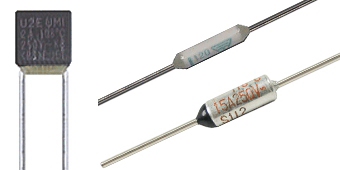
Clause 3 – How to understand the definition of “thermal link”

thermal link: thermal cut-out which operates only once and requires partial or complete replacement

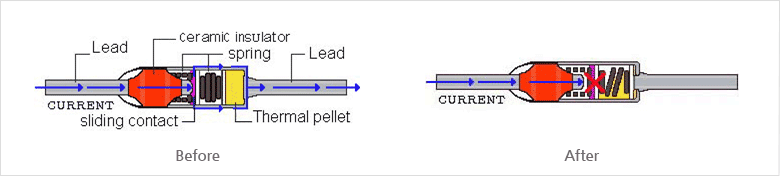
It is a temperature sensing device, but it can only be operated once, when the temperature is higher than its set value, it will disconnect, and after disconnection, the current can not pass through, so as to play the role of power failure. Once disconnected, it will not be like self-resetting thermal cut-out, due to the temperature drop and reset itself to connect to the power supply; can only be partially or complete replaced to connect to the original circuit.
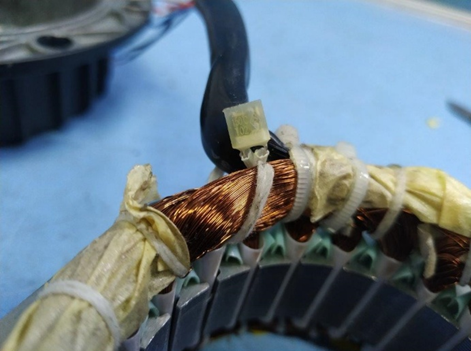
In practice, this part is rarely replaced. Because thermal links are generally more securely fastened and difficult to replace, like they are used in motors. They are used in motors and in many heating appliances, such as electric water heaters, room heaters, etc. It is generally used as the ultimate means of thermal protection. Generally speaking, before it is actuated, a self-resetting thermal cut-out with a lower operating temperature is allowed to act first. If the self-resetting thermal cut-out does not eliminate the danger, the thermal link will completely cut off the circuit and keep the circuit continuously disconnected.
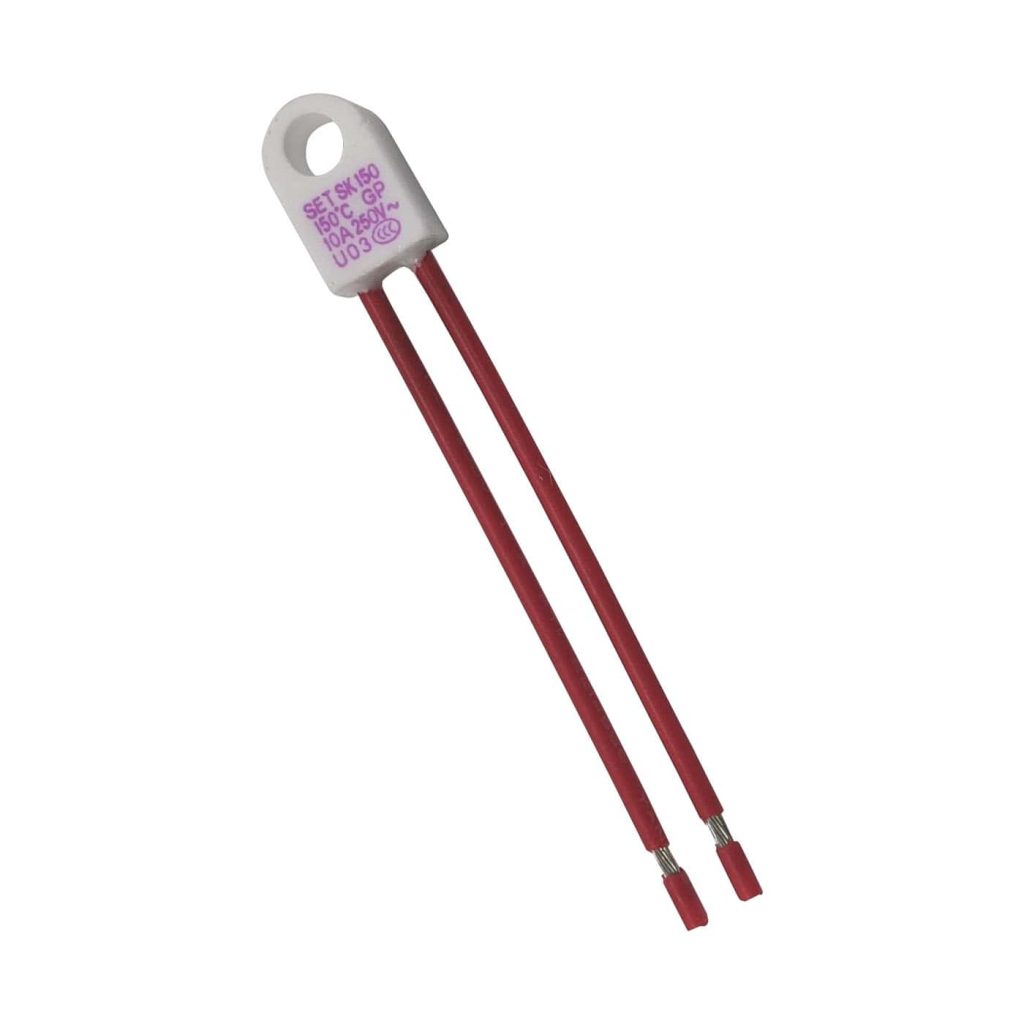
The following pictures show a thermal link in a motor and a thermal link in a room heater.
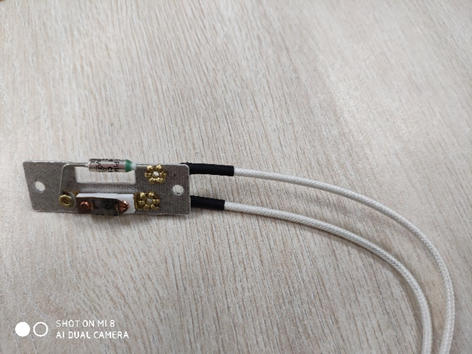
thermal fuses
SK150 Thermal Fuse
internal view for thermal fuse

Similar Posts

  • ข้อ 3 – จะเข้าใจคำจำกัดความของ “อุปกรณ์คลาส III” ได้อย่างไร

    หมายเหตุ อาจจำเป็นต้องใช้ฉนวนพื้นฐานเพิ่มเติมจากการจัดหาที่ SELV อ้างถึง 8.1.4.คำว่า “ความปลอดภัย” รวมอยู่ในคำสี่คำ “ความปลอดภัยแรงดันไฟฟ้าต่ำพิเศษ” แต่ไม่ได้หมายความว่า SELV ปลอดภัย และไม่จำเป็นต้องปลอดภัยเมื่อสัมผัสโดยตรง เฉพาะวงจรไฟฟ้าแรงต่ำพิเศษด้านความปลอดภัยที่เป็นไปตามข้อกำหนดมาตรฐานข้อ 8.1.4 เท่านั้นที่สามารถสัมผัสได้โดยตรง เราจะวิเคราะห์และอธิบายสิ่งนี้โดยเฉพาะเมื่อวิเคราะห์ข้อ 8.1.4. พัดลมที่แสดงในภาพด้านล่างสามารถกำหนดเป็นอุปกรณ์คลาส III ได้ อย่างไรก็ตาม พัดลมชนิดนี้มีสองหู ซึ่งทำให้ไม่เป็นไปตามข้อ 22.44 เราจะอธิบายรายละเอียดในภายหลัง The word “safety” is included in the four words “safety extra low voltage”, but this does not mean that SELV is safe, and it is not necessarily safe to touch…

  • ข้อ 3 – วิธีทำความเข้าใจคำจำกัดความของ “เรต” ในข้อ 3.1.1 – 3.1.8

    เพื่อสรุปจุดประสงค์ของมาตรฐาน “ เรต” แสดงถึงชุดพารามิเตอร์ที่กำหนดให้กับเครื่องใช้ไฟฟ้าโดยผู้ผลิตตามข้อกำหนดของข้อ 7 พารามิเตอร์บางตัวในกลุ่มที่ได้รับการจัดอันดับนี้มักจะต้องมีการทำเครื่องหมายบนฉลากการให้คะแนน ผู้ออกแบบผลิตภัณฑ์จะกำหนดพารามิเตอร์เหล่านี้ตามความต้องการของผู้ใช้ แรงดันไฟฟ้าและความถี่ที่กำหนดจะถูกกำหนดตามเงื่อนไขของแหล่งจ่ายไฟฟ้าในสถานที่ที่จะใช้ผลิตภัณฑ์ และแตกต่างกันไปในแต่ละประเทศ ดังนั้นจึงจำเป็นต้องออกแบบผลิตภัณฑ์ตามเงื่อนไขของ ประเทศต่างๆ นี่คือข้อมูลอ้างอิง หน้าเว็บ คุณสามารถตรวจสอบข้อมูลสภาพแหล่งจ่ายไฟของเกือบทุกประเทศได้ กระแสไฟที่กำหนดหรือกำลังไฟที่กำหนดจะถูกกำหนดตามความต้องการของผู้ใช้ เช่น หากผู้ใช้ต้องการเครื่องทำความร้อนในห้องที่ทรงพลัง ผู้ออกแบบจะออกแบบเครื่องทำความร้อนในห้องที่มีกำลังไฟเข้าพิกัด 3000W ตามความต้องการของผู้ซื้อ ในทางกลับกัน นอกจากนี้ยังสามารถออกแบบสำหรับเครื่องทำความร้อนในห้องที่ใช้พลังงานต่ำมาก เช่น 500W หรือน้อยกว่าได้อีกด้วยก่อนที่เราจะทดสอบตามมาตรฐาน เราจำเป็นต้องยืนยันค่าพารามิเตอร์ที่กำหนด เนื่องจากการทดสอบจำนวนมากในมาตรฐานจะขึ้นอยู่กับค่าพารามิเตอร์ที่กำหนดเพื่อกำหนดเงื่อนไขการทดสอบ หากค่าพารามิเตอร์ที่กำหนดไม่ถูกต้อง ผลการทดสอบส่วนใหญ่ของเรา คงจะผิดแน่นอน.. Before we test according to the standard, we need to confirm the rated parameter values, because many tests in the standard are based on the…

  • Clause 3 – How to understand the definition of “built-in appliance”

    built-in appliance: fixed appliance intended to be installed in a cabinet, in a prepared recess in a wall or in a similar location. Here, because the appliance must be installed in a reserved position (usually a cubic space with only one side open), it is a fixed installation and can be regarded as a fixed…

  • How are the creepage distances and electrical clearances of PTC heating element surfaces determined?

    We are discussing here the second structure of the PTC heating element, PTC heating element structure please refer to the explanation of its definition. How is the creepage distance of the functional insulation at the location of the red circle in Figure 1 determined? We all know that NOTE 1 of TABLE 18 section has…

  • ข้อ 3 – วิธีทำความเข้าใจคำจำกัดความของ “แรงดันอิมพัลส์ที่กำหนด”

    : แรงดันไฟฟ้าที่ได้มาจากแรงดันไฟฟ้าที่กำหนดและประเภทแรงดันไฟฟ้าเกินของเครื่องใช้ไฟฟ้า ซึ่งแสดงคุณลักษณะความต้านทานที่ระบุของฉนวนต่อแรงดันไฟฟ้าเกินชั่วคราวสำหรับผู้เริ่มต้น ไม่จำเป็นต้องเข้าใจความหมายทางกายภาพของคำจำกัดความนี้จริงๆ การใช้งานหลักของค่าแรงดันไฟฟ้าในมาตรฐานคือการกำหนดค่าขีดจำกัดของระยะห่าง อ้างอิงถึงตารางที่ 15 สามารถกำหนดค่าแรงดันไฟฟ้าอิมพัลส์ที่กำหนดได้โดยตรง ประโยคบนสุดของตารางที่ 15 ระบุว่า “เครื่องใช้ไฟฟ้าอยู่ในหมวดแรงดันไฟฟ้าเกิน II” หากแรงดันไฟฟ้าที่กำหนดของผลิตภัณฑ์คือ AC220-240V ซึ่งสอดคล้องกับแถวสุดท้ายของค่าในคอลัมน์แรกของตารางที่ 15 แรงดันไฟฟ้าพัลส์ที่กำหนดจะถูกกำหนดไว้ที่ 2500Vฉันต้องบอกว่าหมวดแรงดันไฟฟ้าเกิน (OVC) มาจากมาตรฐาน IEC 60664-1 ตารางด้านล่างให้คำจำกัดความแก่เรา ในทางกลับกัน มีภาพวาดอธิบายหมวดหมู่แรงดันไฟฟ้าเกิน (OVC) On the other hand, there is a drawing to explain overvoltage category(OVC).